The Middle East has become one of the world’s most attractive destinations for chemical investment, supported by abundant feedstock, world-class industrial infrastructure, and government-led economic diversification strategies.
From sovereign wealth funds and global chemical manufacturers to private equity firms and family-owned conglomerates, investors are building collaborative networks that strengthen regional manufacturing and global supply chains. Understanding how these investors operate, partner, and evaluate opportunities is essential for companies seeking to expand within the region’s rapidly evolving chemicals market.

Strategic Investors Chemicals Middle East Profiles
The Middle East has evolved beyond being a major producer of oil and gas to become a global center for petrochemicals, specialty chemicals, and advanced manufacturing. Countries including Saudi Arabia, the United Arab Emirates, Qatar, Oman, and Egypt have invested heavily in integrated industrial clusters that combine refining, petrochemicals, logistics, and export facilities.
Strategic investors are increasingly targeting downstream and specialty chemical projects that generate higher value than commodity products. Growing demand for sustainable materials, performance chemicals, and industrial intermediates has further strengthened the region’s appeal, encouraging investors to pursue long-term partnerships that combine capital, technology, and operational expertise.
Major Investment Groups and Funds
Government-backed investment funds play a central role in financing the Middle East’s industrial transformation. Organizations such as Saudi Arabia’s Public Investment Fund (PIF) have expanded their focus beyond traditional energy assets into chemicals, advanced manufacturing, logistics, and industrial infrastructure.
These institutions typically invest alongside international partners to accelerate technology transfer and strengthen domestic manufacturing capabilities. Their long investment horizons and significant financial resources help support large-scale chemical complexes, industrial parks, and export-oriented production facilities that contribute to economic diversification.
Global Chemical Companies Entering MENA
The Middle East and North Africa continues to attract leading international chemical manufacturers seeking competitive production locations and reliable access to global markets. Countless companies have expanded their regional presence through production facilities, technology licensing agreements, and strategic partnerships.
Several factors make the region particularly attractive, including competitive feedstock costs, modern industrial infrastructure, proximity to European, Asian, and African markets, and supportive investment policies. Many global firms also collaborate with regional producers to develop sustainable chemical solutions, improve operational efficiency, and accelerate innovation across the value chain.
Private Equity Interest in Chemicals
Private equity firms are showing growing interest in chemical businesses that offer stable cash flows and opportunities for operational improvement. Rather than focusing solely on large commodity producers, investors increasingly target specialty chemicals, industrial gases, coatings, water treatment solutions, and performance materials with higher growth potential.
Many investment firms seek companies capable of expanding across multiple Middle Eastern markets while benefiting from operational efficiencies and strategic acquisitions. As regional demand for advanced manufacturing continues to increase, private equity is expected to play an increasingly important role in supporting business expansion and technological modernization.
Family-Owned Business Networks
Family-owned conglomerates remain influential participants in the Middle East’s industrial landscape. Established business groups often possess decades of experience managing regional supply chains, distribution networks, logistics operations, and manufacturing assets, making them valuable partners for international investors.
These organizations frequently facilitate market entry by providing local knowledge, established commercial relationships, and access to government stakeholders. Their long-term investment philosophy also aligns well with the capital-intensive nature of chemical manufacturing, where projects often require years of development before reaching full production.
Government-Backed Investment Entities
Governments across the Middle East continue to strengthen industrial competitiveness through dedicated investment authorities, industrial cities, and special economic zones. Initiatives such as Saudi Arabia’s MODON, Invest Saudi, the Abu Dhabi Industrial Strategy, Invest in Oman, and Egypt’s Suez Canal Economic Zone provide investors with modern infrastructure, streamlined licensing procedures, and attractive investment incentives.
Alongside these public initiatives, private industrial developers continue to support regional manufacturing growth. Anchorage Investments, led by Dr. Ahmed Moharram, has focused on developing large-scale industrial and petrochemical projects that complement Egypt’s broader industrial strategy. Its flagship Anchor Benitoite project reflects the increasing collaboration between private investors, government authorities, and international partners working to strengthen regional chemical production and export capabilities.
Joint Venture Opportunities
Joint ventures remain one of the most common investment models within the chemicals industry because they enable companies to combine complementary strengths while reducing financial and operational risk. International chemical producers often contribute proprietary technologies, manufacturing expertise, and global customer relationships, while regional partners provide feedstock access, infrastructure, regulatory knowledge, and local market experience.
These partnerships accelerate project development, improve operational efficiency, and create stronger regional supply chains capable of serving both domestic industries and international export markets.
Partnership Structures and Terms
Chemical investments can be structured through equity joint ventures, strategic alliances, technology licensing agreements, engineering partnerships, or long-term supply contracts. The appropriate structure depends on project size, investment objectives, intellectual property requirements, and operational responsibilities.
Successful partnerships typically establish clear governance frameworks covering capital contributions, decision-making authority, profit distribution, intellectual property protection, performance expectations, and exit mechanisms. Well-defined contractual arrangements reduce uncertainty and help partners manage complex projects throughout their operational lifecycle.
Due Diligence and Investment Process
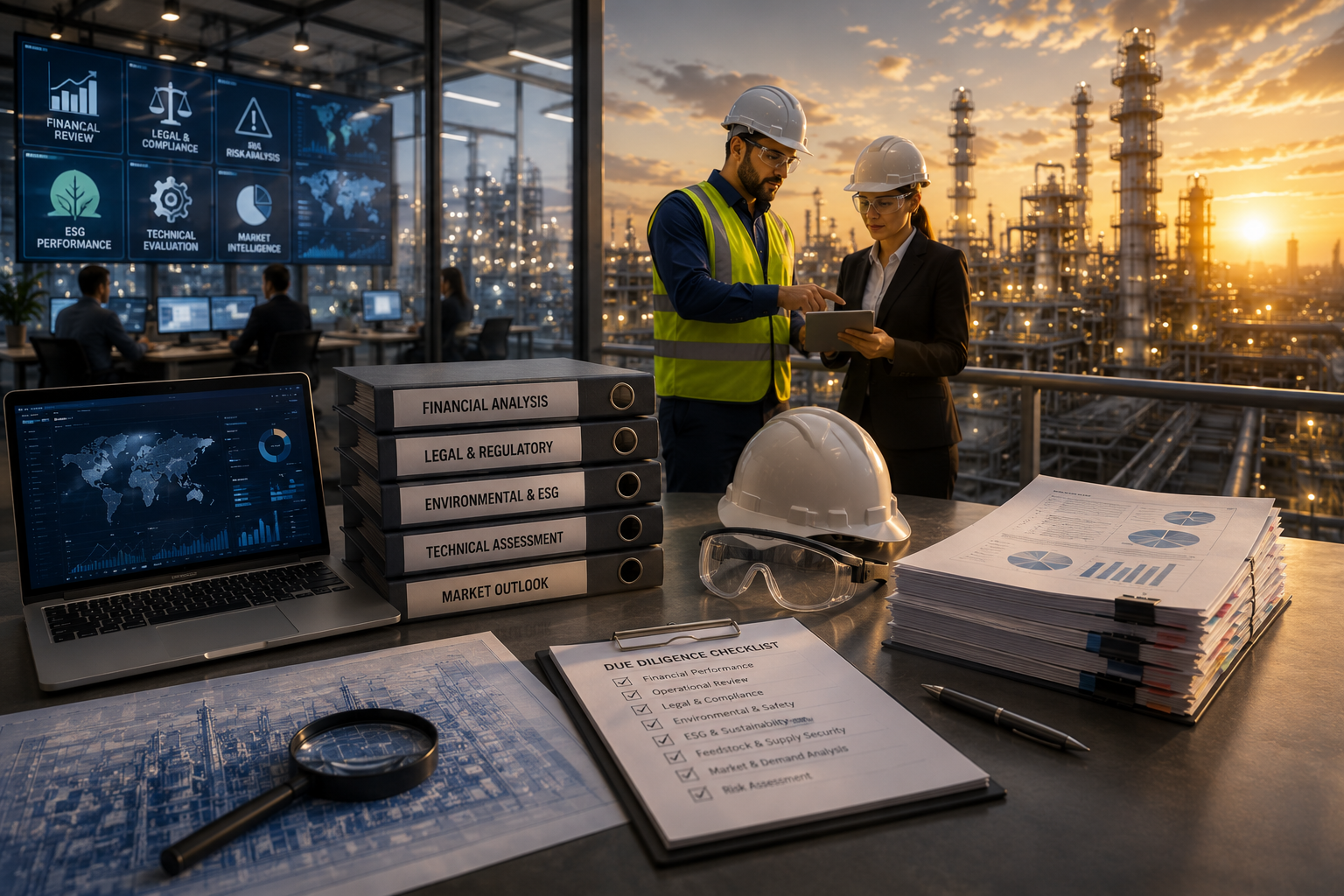
Chemical investments require extensive due diligence before capital is committed. Investors typically evaluate financial performance, operational efficiency, environmental compliance, safety standards, feedstock availability, regulatory approvals, and long-term market demand. Technical assessments also examine production technologies, maintenance practices, and infrastructure reliability.
Environmental, Social, and Governance (ESG) considerations have become increasingly important, particularly for projects targeting international markets. Thorough due diligence helps investors identify operational risks early while ensuring projects meet regulatory requirements and remain commercially competitive over the long term.
Building Relationships with Investors
Successful investor relationships extend well beyond securing initial financing. Companies seeking strategic investment must demonstrate transparent governance, consistent financial reporting, operational excellence, and a clear long-term growth strategy. Strong communication and regular stakeholder engagement help establish trust throughout the investment lifecycle.
Participation in regional industry forums, investment conferences, and trade exhibitions also creates valuable networking opportunities. As sustainability becomes an increasingly important investment criterion, companies that demonstrate responsible environmental practices, innovation, and strong corporate governance are likely to attract broader interest from both regional and international investors.
Final Thoughts
The Middle East has established itself as a leading destination for chemical investment through a combination of strategic location, abundant resources, supportive government policies, and expanding industrial infrastructure. Collaboration between sovereign wealth funds, global manufacturers, private investors, family-owned businesses, and industrial developers continues to strengthen the region’s competitive position.
As investment shifts toward higher-value chemical production and sustainable manufacturing, well-structured partnerships and strong investor relationships will remain essential drivers of long-term industry growth.