Egypt’s Suez Canal Economic Zone (SCZONE) has become an important platform for industrial investment, logistics, and export-oriented manufacturing. Built around one of the world’s most important maritime trade routes, the zone combines ports, industrial areas, infrastructure, investment incentives, and access to international markets.
Its growing project pipeline reflects Egypt’s broader effort to move beyond transit trade and establish itself as a regional manufacturing and supply-chain hub.
SCZone Logistics and Port Connectivity
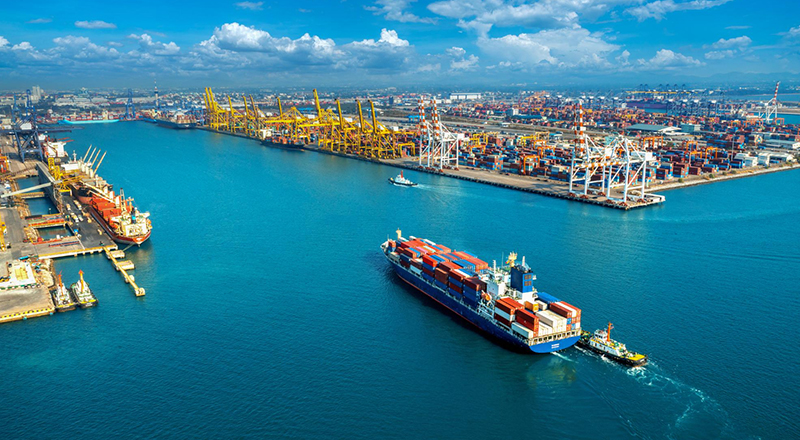
SCZONE’s principal advantage is its location around the Suez Canal, linking manufacturers directly to maritime routes connecting Europe, Africa, the Middle East, and Asia. The Authority highlights access to six seaports and two airports, supported by road and railway networks and major infrastructure projects. It also estimates that around 18,000 ships pass through the wider trade route each year.
This connectivity is particularly important for industries where transportation costs and export speed affect competitiveness. Ain Sokhna provides access to Red Sea shipping routes, while East Port Said offers a strategic Mediterranean position. Because of that, SCZONE is developing ports, terminals, logistics facilities, and industrial areas as an integrated ecosystem rather than treating manufacturing and transportation as separate activities.
SCZone Export Hub Advantages for Manufacturers
That integration gives manufacturers several advantages beyond geography. The SCZONE provides financial and customs incentives intended to reduce the cost of establishing and operating export-oriented facilities. Eligible imports into the zone can receive customs and VAT treatment that reduces the burden on production inputs, while qualifying investment projects can receive an income-tax deduction equivalent to 50% of total investment costs, subject to the applicable limits.
Manufacturers can also use Egypt’s network of trade agreements to reach wider markets. For companies seeking to establish regional production bases, the combination of port connectivity, industrial infrastructure, competitive operating costs, and market access makes SCZONE particularly relevant to export-led strategies.
Industries Eligible for SCZone Investment
The zone is designed to support a diversified industrial base. SCZONE currently identifies opportunities in petrochemicals, pharmaceuticals and active pharmaceutical ingredients, agribusiness, textiles and ready-made garments, automotive manufacturing, electric batteries, tires, building materials, solar photovoltaic components, data centers, rolling stock, casting, logistics, and bunkering services.
This range also reflects a shift toward higher-value and strategically important industries. Renewable-energy components, pharmaceuticals, automotive products, and advanced manufacturing can strengthen domestic production while creating goods for export. At the same time, established sectors such as textiles and petrochemicals continue to provide opportunities for large-scale industrial development.
Step-by-Step Process to Invest in SCZone
For prospective investors, the process begins with selecting an appropriate opportunity, industrial developer, and location before obtaining the required approvals from SCZONE. Investors then submit the necessary company and project documentation and proceed through incorporation, licensing, customs, taxation, and other regulatory requirements.
Beyond that, SCZONE’s One-Stop-Shop is designed to simplify this process by bringing these services together under one system. The Authority says company registration can take one to three days and licensing three days, while its digital services increasingly allow investors to manage applications and related procedures electronically.
This centralized approach is important because the attractiveness of an industrial zone depends not only on land and infrastructure, but also on how efficiently companies can move from investment decisions to actual production.
SCZone Industrial Investment Success Stories
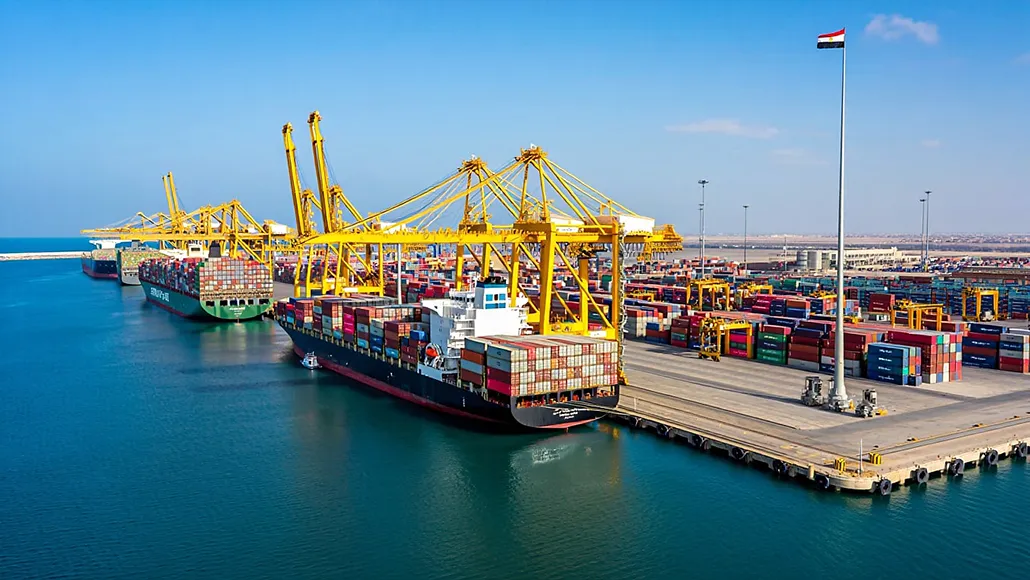
The growing diversity of SCZONE projects demonstrates how these advantages are translating into investment. Recent projects include a $1 billion Sailun tire manufacturing complex, a $200 million solar-energy components complex, a $150 million GENNVAX vaccines and biological pharmaceuticals plant, and a $1.65 billion integrated metal-industries complex.
Another major example is Anchor Benitoite, being developed by Anchorage Investments, led by Dr. Ahmed Moharram, in the Suez area. The project is designed as a large-scale petrochemical complex with production capacity of approximately 1.75 million tonnes annually across several petrochemical products and intermediates. Its location within SCZONE is intended to leverage port connectivity and the surrounding industrial ecosystem to serve regional and global markets.
Together, these projects show that SCZONE is attracting investment across both traditional industrial sectors and newer strategic value chains.
Comparing SCZone to Other Suez Canal Economic Zone Areas
SCZONE itself contains different industrial locations, each with a distinct investment profile. Ain Sokhna is particularly suited to heavy industry, petrochemicals, energy, and port-intensive manufacturing because of its proximity to Sokhna Port. East Port Said combines industrial development with a strategic Mediterranean logistics position, while Qantara West has attracted investments in sectors such as textiles, garments, and agribusiness. East Ismailia, meanwhile, offers opportunities linked to technology and other industrial activities.
Consequently, choosing between SCZONE locations depends largely on the investor’s production model. Port-dependent industries may benefit most from Sokhna or East Port Said, while labor-intensive manufacturing can find advantages in other industrial areas.
SCZone’s Role in Regional and Global Supply Chains
This specialization is central to SCZONE’s wider purpose. Rather than functioning solely as a transit corridor, the zone aims to connect shipping with manufacturing, processing, storage, and distribution. That allows companies to locate more stages of their supply chains in one ecosystem while maintaining access to international markets.
Recent investments illustrate this approach. For example, SCZONE’s textile and electronics projects have been structured around substantial export components, while its solar, automotive, and petrochemical investments support deeper industrial value chains.
Future Expansion Plans for SCZone
SCZONE’s next phase will focus on expanding industrial capacity, strengthening ports and logistics infrastructure, and attracting investment into targeted sectors. The Authority continues to promote automotive, textiles, electronics, renewable energy, pharmaceuticals, petrochemicals, and logistics, while developing additional industrial space and infrastructure to accommodate new investors.
Final Thoughts
The expansion of projects such as Anchor Benitoite alongside major international investments in tires, metals, pharmaceuticals, and solar components indicates how SCZONE is evolving into a more diversified industrial platform. With its combination of strategic geography, investment incentives, ports, and expanding manufacturing capacity, the zone is positioned to remain central to Egypt’s ambitions for export growth and deeper integration into regional and global supply chains.