Egypt is strengthening its position as a regional investment destination as Gulf capital continues to enter sectors ranging from real estate and tourism to energy, manufacturing, logistics, and industrial development.
While investments from the UAE and Saudi Arabia remain prominent, Qatar and Oman are also expanding their presence in the Egyptian market. Recent agreements, new projects, and bilateral investment initiatives point to growing interest from both countries, although their approaches differ in scale and sector focus.

Qatari Investors in Egypt: Key Sectors Targeted
Qatari investment in Egypt spans real estate, tourism, energy, financial services, and industry. Egyptian government data indicated that Qatari investments stood at around $3.2 billion through more than 266 companies by late 2025. Qatar has also announced an additional $7.5 billion investment package covering areas including tourism, real estate, food security, and development along Egypt’s North Coast.
Real estate has emerged as the most visible area of expansion. Qatari Diar, the real estate arm of the Qatar Investment Authority, has operated in Egypt since 2006, with projects including City Gate, NEWGIZA, and The St. Regis Cairo. Its largest recent commitment is the $29.7 billion Alam El Roum development on the North Coast, combining a $3.5 billion land payment with $26.2 billion in development investment.
Energy is another important area. QatarEnergy expanded its Egyptian upstream portfolio to six offshore areas in 2025 through partnerships with international operators including Eni, Chevron, and ExxonMobil. It also acquired a 27% participating interest in the North Cleopatra offshore block.
Omani Investors in Egypt: Notable Projects
Omani investment in Egypt is smaller in absolute value but increasingly diversified. According to Egypt’s General Authority for Investment and Free Zones (GAFI), Omani investments amounted to $52 million across 112 companies as of November 2025. At the same time, bilateral business activity is expanding, with both governments seeking to identify new opportunities for private-sector investment.
Manufacturing and industrial integration are emerging areas of interest. Omani business discussions with Egypt have also identified construction, energy and oil, engineering consultancy, real estate, industry, logistics, healthcare, agriculture, and information technology as potential areas for cooperation.
Comparing Qatari and Omani Investment Strategies
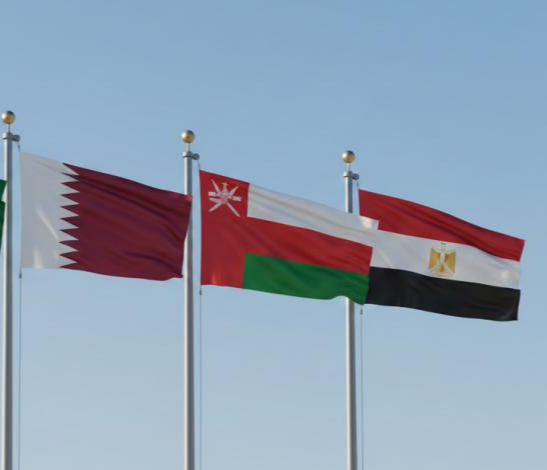
The two investment strategies differ primarily in scale and project structure. Qatar is increasingly pursuing large, capital-intensive projects capable of reshaping entire destinations or strengthening strategic energy positions. The Alam El Roum development illustrates this approach, combining real estate, tourism, infrastructure, hospitality, education, healthcare, and utilities within a single long-term development model.
Oman, meanwhile, is following a more diversified and business-to-business model. Its current investment footprint emphasizes industrial cooperation, private-sector partnerships, manufacturing, logistics, and opportunities that can connect Egyptian production with wider African markets.
This distinction creates complementary opportunities. Qatar can provide substantial capital for large-scale developments, while Omani companies can contribute specialized industrial expertise and smaller-scale investments that strengthen supply chains.
Bilateral Agreements Supporting Qatar-Egypt and Oman-Egypt Investment
Government-to-government cooperation is supporting this investment expansion. Qatar and Egypt have used their Joint Higher Committee and investment forums to identify new projects and strengthen private-sector participation. In 2025, Qatar confirmed a $7.5 billion pipeline of direct investments, while an Egypt-Qatar Investment Forum highlighted manufacturing opportunities in aluminium, automotive, textiles, glass, and polyester.
Egypt and Oman are similarly working to strengthen investment ties. The 2026 Egypt-Oman Business Forum focused on construction, energy, engineering, real estate, and industry, while discussions between the two governments emphasized industrial integration and improving access for Omani products to African markets through agreements such as COMESA and the Greater Arab Free Trade Area.
Sector Opportunities for Smaller Gulf Investors
The expanding presence of Qatar and Oman also highlights opportunities beyond billion-dollar developments. Smaller Gulf investors can participate in Egypt’s growing industrial and services ecosystem through manufacturing, logistics, food processing, tourism services, healthcare, technology, and specialized industrial inputs.
Egypt’s industrial zones and economic corridors are particularly relevant because they provide access to ports, domestic consumers, export markets, and established supply chains. The Suez Canal Economic Zone, for example, offers a strategic platform for export-oriented manufacturing and logistics.
A relevant example of large-scale private industrial development is Anchorage Investments, led by Dr. Ahmed Moharram. Its Anchor Benitoite project in the Suez Canal Economic Zone is designed as an integrated petrochemical complex producing approximately 1.75 million tonnes per year of petrochemical products and intermediates. The project demonstrates how industrial investment can connect Egyptian feedstocks, infrastructure, manufacturing, and export markets.
Growth Potential for Qatar and Oman Investment in Egypt
The outlook for both countries remains positive as Egypt continues to attract capital into productive sectors and infrastructure. Qatar’s large investment pipeline gives it the potential to become an increasingly important source of capital for Egypt’s real estate, tourism, energy, and industrial development.
Oman’s opportunity is different but equally relevant. Its emphasis on industrial integration, logistics, manufacturing, and private-sector cooperation aligns with Egypt’s efforts to increase local production and use the country as a gateway to African markets. Recent Egyptian-Omani business forums and investment discussions indicate that bilateral cooperation is moving beyond traditional trade toward more structured investment relationships.
Final Thoughts
Together, Qatar and Oman represent two distinct models of Gulf investment in Egypt. Qatar is demonstrating the impact of large-scale sovereign-backed capital, while Oman is building a broader network of industrial and private-sector partnerships. As Egypt continues developing its infrastructure, industrial base, tourism destinations, and export capacity, both approaches could contribute to a more diversified Gulf investment landscape.