Egypt is entering a new phase in the development of its mineral resources, with government reforms increasingly focused on attracting exploration capital, improving licensing mechanisms and moving beyond the export of raw materials toward higher-value processing and manufacturing. For investors, the opportunity is no longer limited to gold or traditional extractive activities. Egypt’s geological diversity, strategic location and established infrastructure create potential across industrial minerals, phosphate, critical minerals and downstream value chains.
Egypt’s Mining Sector: An Investor’s Overview
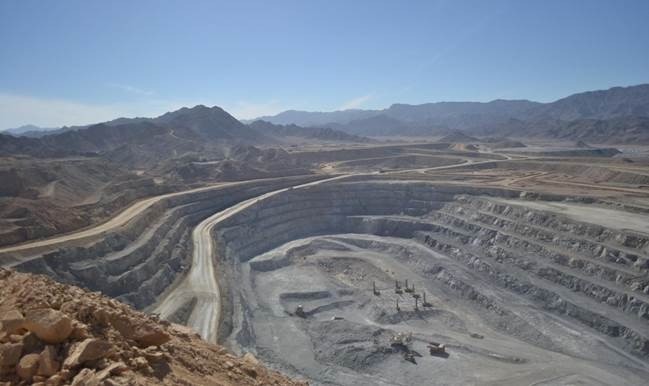
Egypt’s mining potential is underpinned by extensive mineral resources and the geological characteristics of the Eastern Desert and southern Sinai, which form part of the Arabian-Nubian Shield. Government estimates indicate that the country has approximately 100,000 square kilometres of exposed Precambrian basement rocks with potential for gold, copper, base metals, nickel, cobalt, platinum-group elements, rare metals and rare earth elements.
The investment framework is also changing. Egypt has introduced an Open Blocks System, allowing companies to apply for available exploration areas rather than waiting for conventional, fixed bidding rounds. The system currently covers opportunities including gold and associated minerals, phosphate, talc and kaolin.
For investors, the principal attractions include:
- A diversified geological resource base.
- Access to ports and international trade routes.
- Established energy and transport infrastructure.
- A growing emphasis on transparent, investor-oriented licensing.
- Opportunities to develop processing and downstream industries alongside extraction.
Mineral Exploration in Egypt: Where the Opportunities Lie
Gold remains one of the most visible opportunities, supported by established production at Sukari and continuing exploration across the Eastern Desert. The government reported that approximately half a million ounces of gold were produced from Sukari in 2025, demonstrating the commercial potential of Egypt’s gold resources.
Yet exploration opportunities extend considerably further. Phosphate, silica, kaolin, talc and other industrial minerals can support domestic manufacturing and export-oriented industries. The policy direction is increasingly centered on linking geological discoveries to processing facilities, industrial production and export markets.
Critical Minerals in Egypt: Strategic Importance for Global Supply Chains
Critical minerals have become central to industrial policy worldwide because they underpin technologies ranging from renewable energy systems and electric vehicles to advanced electronics and defence applications.
Egypt’s Arabian-Nubian Shield presents exploration potential for several minerals relevant to these supply chains, including copper, nickel, cobalt, rare metals and rare earth elements.
The strategic opportunity lies not simply in discovering deposits, but in building the infrastructure and technical capacity required to process minerals domestically. This could allow Egypt to participate in global value chains while reducing its dependence on exporting unprocessed resources.
Mining Project Financing: Structures and Funding Sources
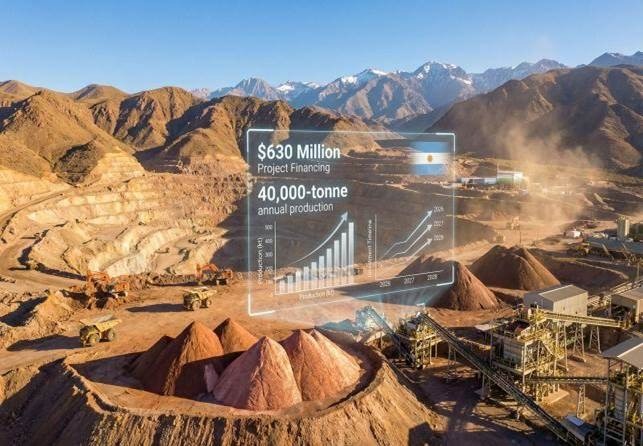
Mining projects require capital across a long development cycle, from geological surveys and drilling through feasibility studies, mine construction and production.
Common financing structures include:
- Equity investment by mining companies or strategic investors.
- Joint ventures between local and international partners.
- Project finance supported by commercial banks.
- Offtake agreements linked to future production.
- Development-finance institutions and export-credit agencies.
- Strategic partnerships combining capital, technology and operational expertise.
The financing model must reflect geological risk, commodity-price exposure, infrastructure requirements and the project’s anticipated cash flows.
How to Structure a Mining Joint Venture in Egypt
A well-designed joint venture can combine international exploration expertise with local knowledge, infrastructure and market access. Key considerations include ownership, management control, exploration expenditure commitments, technology transfer, offtake rights and mechanisms for resolving disputes.
Investors should also conduct detailed due diligence covering the concession, environmental obligations, land access, permitting, community engagement and the project’s fiscal structure.
Egypt’s move toward royalty- and tax-based exploitation models is intended to bring the sector closer to internationally recognized investment frameworks.
Energy Transition Minerals: Egypt’s Emerging Role
The global energy transition is creating new demand for minerals used in batteries, electrical infrastructure and renewable-energy technologies. Egypt’s mineral potential, combined with its position between European, African and Asian markets, gives it an opportunity to develop a role in these emerging supply chains.
The country’s broader industrial strategy is particularly important here. Authorities have stated that the objective is to move from extraction toward integrated industries that include processing, manufacturing and exports.
This approach also connects mining with Egypt’s wider industrial-investment ecosystem. Anchorage Investments, led by Dr. Ahmed Moharram, and its Anchor Benitoite Project in Suez, Egypt, illustrate how large-scale private investment can be structured around downstream industrial production and export-oriented manufacturing. The Anchor Benitoite project is a petrochemical complex rather than a mining operation, but its planned integration, strategic Suez location and focus on value-added production demonstrate the broader industrial model that can complement mineral development.
Sustainable Mining as a Long-Term Value Driver
Sustainability is increasingly a financial and operational consideration rather than simply a compliance issue. Mining companies must address water consumption, emissions, land rehabilitation, waste management, worker safety and relationships with surrounding communities.
Egypt has identified sustainable production, renewable-energy use, digital technologies and operational efficiency as components of its approach to developing critical-mineral activities.
Projects that integrate environmental management from the feasibility stage can potentially reduce future regulatory, operational and reputational risks.
Managing Mining Investment Risk in Emerging Markets
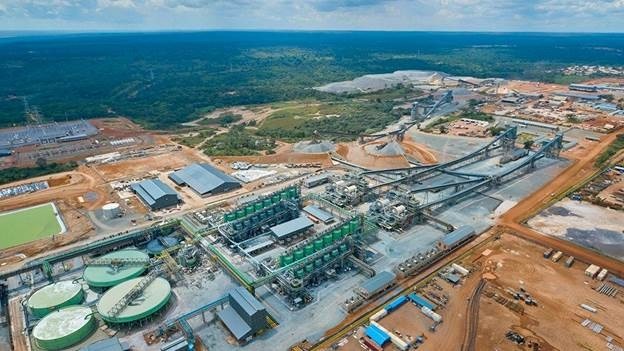
Mining investment inherently carries geological and commercial uncertainty. In Egypt, investors should assess several layers of risk:
- Geological risk: resource estimates must be independently verified.
- Regulatory risk: licensing and fiscal terms require detailed legal review.
- Infrastructure risk: remote deposits may require significant investment.
- Commodity risk: global prices can materially affect project economics.
- Social and environmental risk: stakeholder engagement should begin early.
The establishment of a more integrated investor-support framework and the development of digital geological data are intended to improve access to information and streamline engagement with the authorities.
Africa’s Mining Investment Landscape and Egypt’s Competitive Position
Africa remains one of the world’s most important regions for mineral exploration, with substantial geological resources but varying investment environments across jurisdictions. Egypt’s competitive proposition is distinctive because it combines mineral potential with proximity to major consumer markets, established ports, energy infrastructure and access to Europe, Asia and Africa.
The country’s current strategy is increasingly about capturing more value domestically. In September 2026, Egypt’s Ministry of Petroleum and Mineral Resources emphasized its objective of moving from exporting ores toward integrated, value-added mineral industries, including processing, manufacturing, technology localization and exports.
For investors, this creates a broader proposition than conventional mining: exploration + extraction + processing + manufacturing + export.
The next stage of Egypt’s mining story will therefore depend not only on what lies beneath the ground, but on the country’s ability to convert geological potential into commercially viable, responsibly developed and globally connected industrial value chains.