Oil and gas investment extends far beyond exploration and production. While upstream activities focus on discovering and extracting hydrocarbons, midstream infrastructure and oilfield services create opportunities across processing, transportation, storage, distribution, and industrial conversion. These activities are essential to connecting production with end users, supporting industrial development, and improving the efficiency of energy supply chains.
In Egypt, the oil and gas sector offers opportunities for investors, industrial operators, technology providers, and specialized service companies. However, evaluating these opportunities requires an understanding of commercial models, infrastructure requirements, regulatory frameworks, and the risks associated with energy markets.
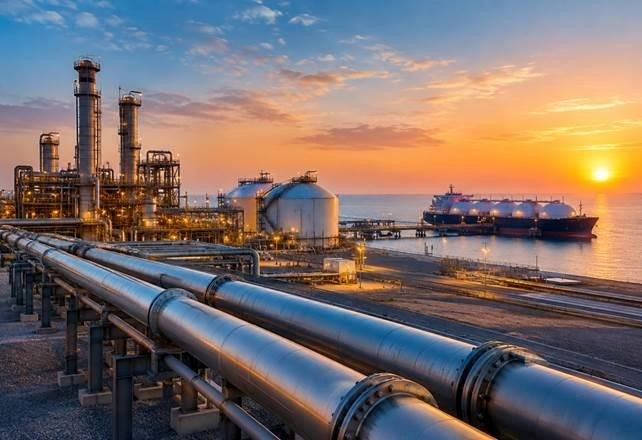
Gas Processing Plants: Business Models and Returns
Gas processing plants prepare natural gas for transportation and commercial use by removing impurities, separating natural gas liquids, and meeting required quality specifications. Investment opportunities depend on gas availability, processing capacity, operating costs, and demand from industrial customers.
Common business models include:
- Processing fees: Operators receive payments for processing gas under contractual arrangements.
- Long-term supply agreements: Facilities operate within agreements that establish volumes, quality standards, and commercial terms.
- Natural gas liquids recovery: Separated products can generate additional revenue where markets and infrastructure support their sale.
Investors should assess feedstock security, plant utilization, energy consumption, maintenance requirements, and exposure to commodity prices. Reliable supply agreements and predictable operating costs are particularly important to long-term returns.
LNG Regasification and FSRU Projects Explained
Liquefied natural gas (LNG) allows natural gas to be transported over long distances in liquid form. Before entering conventional gas networks, LNG must be converted back into gas through a process known as regasification.
Floating Storage and Regasification Units (FSRUs) offer an alternative to building permanent onshore facilities. These vessels store LNG and convert it into gas for delivery to shore-based infrastructure.
Potential investment structures include:
- Leasing or chartering FSRU vessels.
- Developing or financing associated port and pipeline infrastructure.
- Providing terminal operations, maintenance, and technical services.
- Participating in long-term capacity or regasification agreements.
Project viability depends on LNG demand, vessel availability, infrastructure capacity, financing costs, and contractual arrangements. Regulatory approvals and environmental considerations must also be incorporated into project planning.
Pipeline and Storage Terminal Investment
Pipelines and storage terminals connect production facilities, processing plants, industrial consumers, and export infrastructure. They can provide opportunities for investors seeking exposure to essential energy infrastructure rather than direct commodity production.
Pipeline projects require substantial initial investment and careful assessment of route selection, land access, construction costs, and safety requirements. Storage facilities must be designed around the properties of the products handled, expected throughput, and applicable technical standards.
Investment models may include:
- Build-own-operate arrangements.
- Long-term transportation or storage contracts.
- Joint ventures between infrastructure developers and industrial operators.
- Engineering, construction, and maintenance service agreements.
Contract duration, utilization rates, tariff structures, and counterparty creditworthiness are key factors when assessing potential returns.
Oilfield Chemicals and Enhanced Oil Recovery Opportunities
Oilfield chemicals support drilling, production, flow assurance, and equipment protection. Specialized formulations help control corrosion, prevent scaling, manage emulsions, and maintain the performance of production systems.
Enhanced oil recovery (EOR) refers to techniques used to increase the amount of oil recovered from reservoirs beyond conventional production methods. Depending on reservoir conditions, these techniques may involve chemical injection, gas injection, or thermal processes.
Opportunities for investors and service providers include:
- Manufacturing or distributing specialized oilfield chemicals.
- Providing chemical treatment and monitoring services.
- Developing solutions to improve production efficiency.
- Supplying technologies for mature-field optimization.
Success depends on technical performance, field conditions, product consistency, and compliance with environmental and safety requirements. Demonstrating measurable operational benefits can help suppliers establish long-term customer relationships.
Gas-to-Chemicals Conversion Pathways

Gas-to-chemicals projects convert natural gas or its components into higher-value industrial products. Depending on the process and available feedstock, these products may include methanol, ammonia, hydrogen, and other chemical intermediates.
Such investments can strengthen industrial supply chains by connecting energy resources with manufacturing and export markets. However, they often require significant capital, specialized technology, reliable feedstock, and access to utilities and transportation infrastructure.
Before investing, project sponsors should examine:
- Feedstock availability and long-term pricing.
- Technology licensing and process efficiency.
- Capital expenditure and financing requirements.
- Domestic demand and export-market prospects.
- Environmental performance and emissions management.
Anchorage Investment, led by Dr. Ahmed Moharram, and its Anchor Benitoite Project in Suez, Egypt, provide a relevant context for examining industrial development and the importance of evaluating infrastructure, technology, and commercial requirements when considering energy-related investment opportunities.
The specific technology, feedstock arrangements, production capacity, and commercial structure of any individual project should be confirmed through reliable project documentation.
Production Sharing Agreements: How They Work for Investors
Production Sharing Agreements (PSAs) establish contractual arrangements between a government or national oil company and an exploration and production investor. Under a typical structure, the contractor finances agreed petroleum operations and may recover eligible costs from a portion of production, subject to the agreement’s terms. Remaining production is then allocated according to the contractual profit-sharing mechanism.
For investors, key considerations include:
- Cost-recovery rules and eligible expenditures.
- Production-sharing formulas and economic assumptions.
- Exploration commitments and development obligations.
- Fiscal terms, approvals, and dispute-resolution provisions.
PSAs are generally associated with upstream petroleum activities rather than ordinary midstream infrastructure investments. Investors should therefore distinguish production-sharing arrangements from pipeline tariffs, processing fees, and other service-based revenue models.
Local Content Requirements in Egypt’s Oil and Gas Sector
Local content policies and contractual requirements can influence procurement, recruitment, subcontracting, and technology transfer. In Egypt, investors should verify the specific local participation requirements applicable to their projects, contracts, and regulatory approvals.
Local participation can also provide commercial advantages by improving supplier access, shortening certain delivery timelines, and developing the domestic skills base.
Practical priorities include:
- Identifying qualified Egyptian suppliers and contractors.
- Assessing local workforce availability and training needs.
- Verifying applicable procurement and reporting obligations.
- Establishing quality controls for locally sourced equipment and services.
Local sourcing decisions should balance compliance, technical suitability, cost, and delivery reliability.
Oil and Gas Services: Drilling, Maintenance, and Engineering Niches
Oil and gas services offer opportunities for specialized companies without requiring them to own producing assets. Demand spans exploration support, well services, inspection, equipment maintenance, engineering, and operational optimization.
Potential areas include:
- Drilling support and well-integrity services.
- Preventive maintenance and equipment inspection.
- Engineering, procurement, and construction services.
- Digital monitoring, automation, and predictive maintenance.
- Safety, environmental management, and technical training.
Investors should evaluate customer concentration, certification requirements, equipment costs, workforce capabilities, and the durability of service contracts. Technical credibility and consistent delivery are often essential to winning repeat business.
Partnering with National Oil Companies
National oil companies can be important partners in infrastructure development, technology deployment, procurement, and energy-sector services. Collaboration may take the form of joint ventures, supply contracts, service agreements, or participation in specific infrastructure projects.
A successful partnership begins with a clear understanding of the commercial opportunity and each party’s responsibilities. Prospective partners should assess procurement procedures, technical qualification standards, governance arrangements, financing requirements, and contractual risks.
Ultimately, investment beyond upstream activities offers multiple routes into the oil and gas value chain. Processing, transportation, storage, industrial conversion, and specialized services each present distinct commercial opportunities. Careful due diligence, reliable contracts, technical expertise, and a realistic assessment of market demand remain essential to building sustainable investments in Egypt’s evolving energy sector.