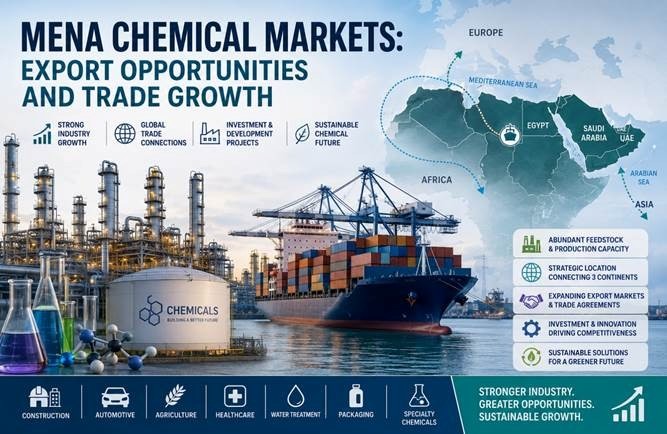
The chemical industry across the Middle East and North Africa (MENA) is entering a new growth phase driven by industrial expansion, infrastructure development, and rising global demand. As governments work to diversify their economies and strengthen manufacturing capabilities, chemical and petrochemical sectors are becoming key contributors to trade, investment, and economic development.
With abundant feedstock resources, expanding industrial clusters, and improving logistics networks, MENA countries are well positioned to seize export opportunities and strengthen their role in global chemical value chains.
Chemicals Market Opportunities in Middle East
The Middle East remains one of the world’s most attractive regions for chemical-production and export. Countries such as Saudi Arabia, the United Arab Emirates, Qatar, and Egypt continue to invest heavily in downstream industries that transform raw materials into higher-value chemical products.
Key opportunities in the region include:
- Expansion of industrial manufacturing sectors
- Growing demand for specialty and performance chemicals
- Increasing investments in sustainable and green chemical production
- Rising consumption of chemicals in construction, automotive, agriculture, and healthcare industries
- Development of integrated industrial and logistics hubs
These factors are creating a favorable environment for both local producers and international investors seeking long-term growth opportunities.
Chemical Trade Africa Europe Growth Trends
The MENA region serves as a strategic bridge between Africa and Europe, making it an important hub for chemical trade flows. Strong maritime connectivity through the Mediterranean Sea, the Red Sea, and the Suez Canal enables efficient access to major markets on both continents.
Recent trends supporting growth include:
- Increased demand for industrial chemicals in emerging African economies
- Continued reliance on imported chemical products across European markets
- Expansion of regional free trade agreements that facilitate cross-border commerce
- Investments in modern port infrastructure and logistics services
As supply chains continue to diversify globally, chemical manufacturers in the MENA region can benefit from their proximity to both mature and developing markets.
Specialty Chemistry Market Egypt Demand
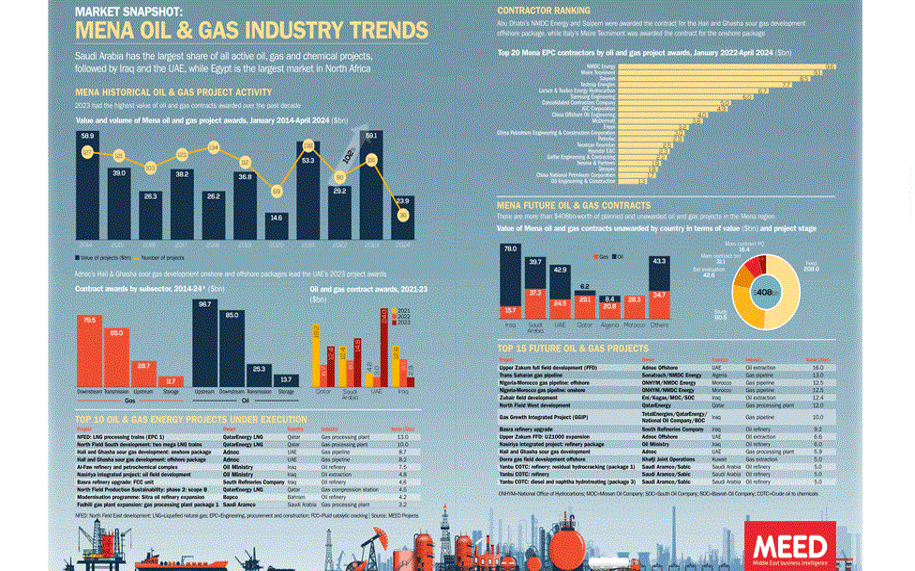
Egypt’s specialty chemicals segment is experiencing growing demand across multiple industries. Unlike commodity chemicals, specialty chemicals are designed for specific applications and often command higher margins.
Several sectors are driving this growth:
- Construction chemicals used in large infrastructure projects
- Water treatment chemicals supporting environmental sustainability initiatives
- Agricultural chemicals that improve crop productivity
- Pharmaceutical and healthcare-related chemical products
- Packaging and consumer goods manufacturing
The increasing sophistication of Egypt’s industrial base is encouraging greater demand for customized chemical solutions, creating opportunities for local production and international partnerships.
Petrochemicals Export Opportunities to Global Markets
Petrochemicals remain one of the most significant export categories within the MENA chemical industry. Global demand for plastics, polymers, fertilizers, and industrial feedstocks continues to support export growth despite economic fluctuations.
Export opportunities are particularly strong in:
- Europe, where manufacturers seek reliable regional suppliers
- Asia, which remains the largest consumer of petrochemical products worldwide
- Africa, where industrialization is creating new demand centers
- Latin America and emerging markets seeking competitive sourcing alternatives
MENA producers benefit from access to energy resources, established production capabilities, and favorable shipping routes that support international competitiveness.
MENA Chemical Development Projects Investment
Large-scale investments continue to reshape the chemical landscape throughout the region. Governments and private-sector stakeholders are launching projects that expand production capacity, improve operational efficiency, and attract foreign direct investment.
Areas receiving significant investment include:
- Petrochemical complexes and integrated refining facilities
- Specialty chemical manufacturing plants
- Industrial parks and economic zones
- Logistics and export infrastructure
- Sustainability-focused projects supporting circular economy objectives
These developments are expected to strengthen the region’s competitiveness and create new opportunities for export-oriented industries over the coming decade.
Strategic Investors Chemicals Middle East Positioning
Strategic investors are increasingly viewing the Middle East as a long-term growth market rather than simply a source of raw materials. Investment strategies now focus on capturing value across the entire supply chain, from production and processing to distribution and advanced manufacturing.
Investors are prioritizing:
- Partnerships with local industrial groups
- Participation in industrial clusters and economic zones
- Investments in technology-driven manufacturing
- Access to export-oriented production platforms
- Sustainable and environmentally responsible operations
This shift is helping accelerate innovation while supporting regional industrial diversification goals.
Egypt’s Chemicals Market Growth Drivers 2026
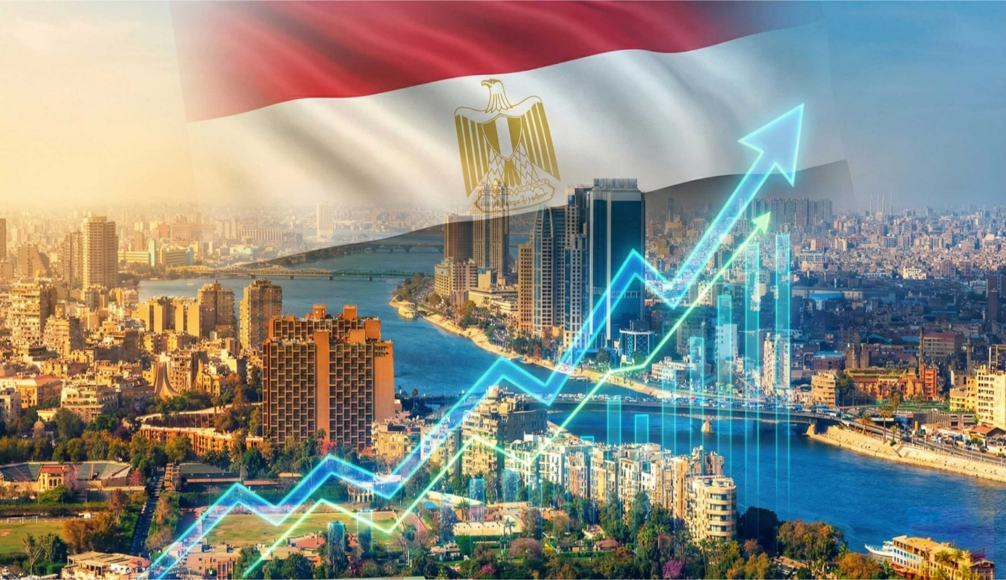
As of 2026, Egypt is expected to strengthen its position as a leading chemical and petrochemical hub within the MENA region. Several structural factors are supporting market growth and investment attractiveness.
Major growth drivers include:
- Strategic access to global trade routes through the Suez Canal
- Expansion of industrial zones and manufacturing clusters
- Government support for industrial development and exports
- Growing domestic demand across key sectors
- Investments in transportation, ports, and logistics infrastructure
- Increasing participation of international investors and strategic partners
As Egypt continues to enhance its industrial capabilities and export competitiveness, the country’s chemical sector is well positioned to capture a larger share of regional and global trade opportunities.
With investment activity accelerating across the MENA chemical sector, private-sector leaders are playing an increasingly important role in advancing large-scale industrial development. Among them, Anchorage Investments, led by Dr. Ahmed Moharram, has contributed to several initiatives supporting Egypt’s petrochemical and industrial expansion. Through strategic projects such as Anchor Benitoite, the company continues to promote opportunities that strengthen regional manufacturing capabilities, attract foreign investment, and enhance Egypt’s position within global chemical value chains.
Conclusion
The MENA chemical industry is undergoing significant transformation, supported by rising investments, expanding export markets, and favorable economic fundamentals. From petrochemicals and specialty chemicals to advanced manufacturing and industrial infrastructure, the region offers substantial opportunities for producers, exporters, and investors.
Egypt, in particular, stands out as a strategic gateway connecting Africa, Europe, and Asia, making it an increasingly important player in the future growth of regional and global chemical trade.