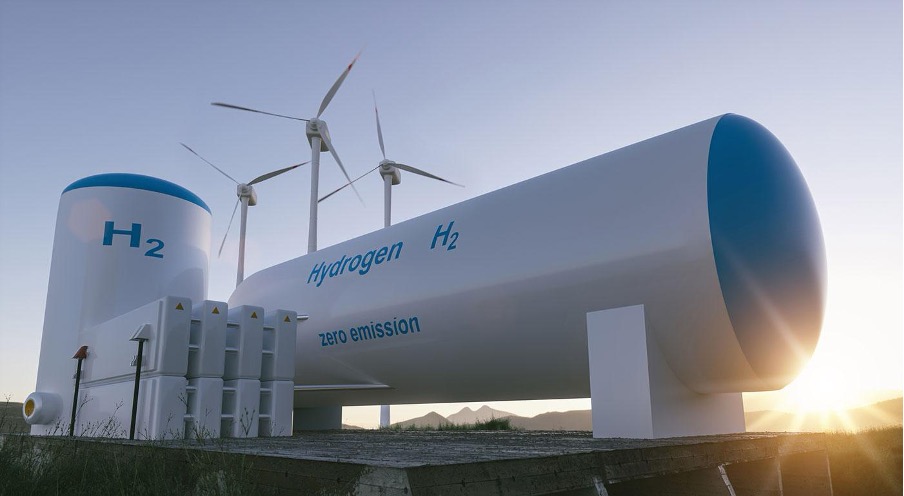
The hydrogen economy is gaining traction around the world — and Egypt is no exception. When we say hydrogen economy, we mean a future in which hydrogen plays a central role as a low-carbon energy carrier, fuel, and feedstock. In parallel, petrochemical integration refers to weaving hydrogen production into the traditional petrochemical value chain. In this article, I explore how Egypt can bring these threads together, from producing blue or green hydrogen to embedding it in refining, chemicals, and downstream units.
Why Hydrogen Matters in Egypt’s Energy Transition
Egypt already produces hydrogen (mostly grey hydrogen) to support fertilizer plants, methanol production, and refining. According to the EBRD’s analysis, Egypt makes around 1.4 million tonnes per year of grey hydrogen, which consumes some 13% of the country’s natural gas demand. EBRD
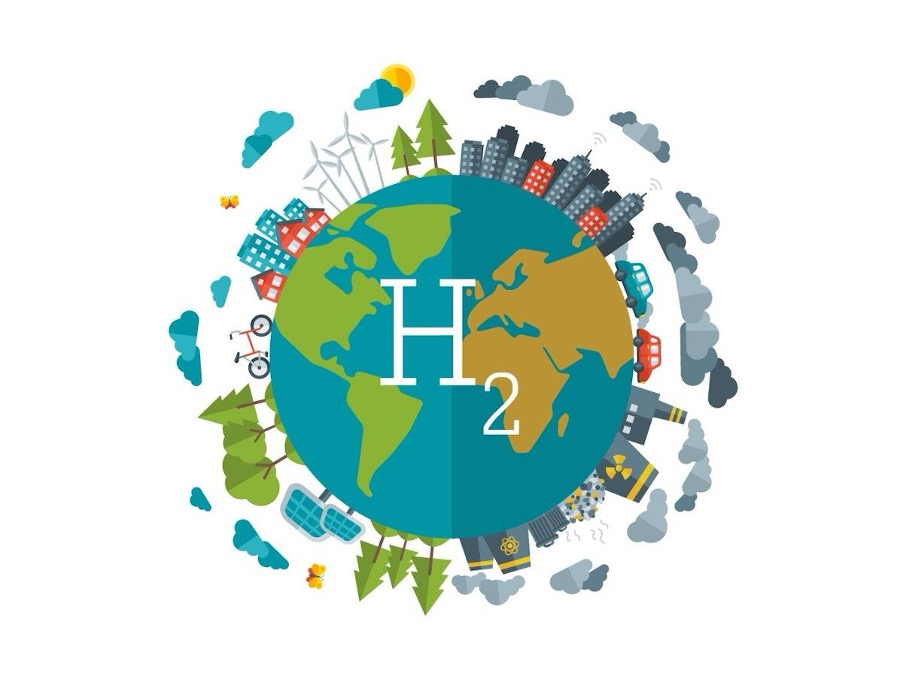
But that approach emits a lot of CO₂. By shifting part of that to low-carbon hydrogen (blue and green), Egypt can reduce emissions, retain industrial competitiveness, and tap export markets. The nation’s National Low Carbon Hydrogen Strategy lays that path forward. Baker McKenzie Resource Hub
At the same time, integrating hydrogen into petrochemicals helps: hydrogen is not just a fuel or storage medium—it’s a feed chemical, a means to decarbonize refining, and a tool to make “low-carbon” fuels and chemicals (ammonia, methanol, etc.).
Let’s unpack key components.
Blue Hydrogen Production from Natural Gas with CCS
Blue hydrogen uses fossil (natural gas) as input, but pairs it with carbon capture and storage (CCS) to trap CO₂ emissions rather than letting them vent to atmosphere. In Egypt, leveraging existing gas infrastructure is appealing. For instance:
- Egypt is evaluating suitable fields (onshore and offshore) for CO₂ storage under a partnership between EGAS and Wintershall Dea.
- Studies have explored CCS hubs in northern Egypt to host captured CO₂ from industrial and power sources.
- One advanced approach, cryogenic carbon capture (CCC), cools exhaust to liquefy or solidify CO₂, which can reduce energy demands in separation.
The benefit: you can ramp up low-carbon hydrogen relatively faster than waiting for full green hydrogen build-out. But you must manage methane leaks, maintain carbon accounting, and ensure that storage is safe over long time frames.
Green Hydrogen Electrolysis for Ammonia Synthesis
Green hydrogen comes from splitting water (H₂O) via electrolysis using renewable electricity. When paired with nitrogen, it yields ammonia (NH₃)—a major chemical with global demand.
In Egypt:
- A $17 billion mega green hydrogen project aims to produce 400,000 tons of liquid hydrogen annually via 3.1 GW of renewable inputs.
- Egypt has signed multiple MoUs for green hydrogen development in the Suez Canal Economic Zone, potentially drawing $40 billion in investment.
- The national strategy envisions scaling electrolysis capacity from ~9.5 GW initially to ~43.9 GW.
Ammonia synthesis is a logical first output because ammonia is easier to store, transport, and convert back to hydrogen — and because demand for low-carbon ammonia is rising (e.g. for fertilizers or shipping fuel).
Hydrogen Infrastructure Development (Pipelines, Storage)
Hydrogen must move from where it’s made to where it’s used. This demands:
- Pipelines: Converting or repurposing existing natural gas pipelines is an approach under consideration.
- Storage: Options include compressed gas, liquid hydrogen, or underground storage (e.g. salt caverns).
- Buffer systems and blending: In transitional phases, hydrogen may blend with natural gas in pipelines.
Egypt’s strategy and hydrogen studies stress building hydrogen infrastructure early to support downstream demand.
Hydrogen Fuel Cell Membrane and Component Materials
For fuel cells (which convert hydrogen back to electricity), membranes and catalysts matter. Proton Exchange Membrane (PEM) fuel cells need durable, low-cost membranes, robust catalysts (often platinum-based or with alloy modifications), and reliable supporting materials (bipolar plates, gas diffusion layers, etc.).
In Egypt’s context, local research and material supply chains are nascent. Attention to catalysis innovation, membrane durability, and cost reduction is essential. Collaborations with universities or international firms may help bridge gaps.
Carbon Taxes and the Economics of Clean Hydrogen
One big lever for clean hydrogen is carbon pricing. When CO₂ emissions cost more—via taxes or inclusion in emissions trading — green or blue hydrogen becomes more competitive relative to grey.
In Egypt, policymakers must calibrate carbon taxes so that industrial users don’t face untenable burdens while still pushing for low-carbon production. In export markets (e.g. to Europe), carbon border adjustment mechanisms (CBAM) may impose costs on high-emission imports — so producing lower-carbon hydrogen derivatives helps Egypt compete.
A revenue-neutral carbon tax or phased introduction might be one design.
Low-Carbon Methanol Production Routes
Methanol (CH₃OH) is a versatile chemical: fuel, solvent, feedstock. You can make low-carbon methanol by combining green or blue hydrogen with captured CO₂. This approach recycles CO₂—turning it into chemical products.
In petrochemical integration, that path ties hydrogen production directly into the chemical industry. It lets a refinery or a CO₂-emitting plant become a methanol factory, reducing net emissions.
Egypt’s studies mention methanol as a key derivative to target when scaling low-carbon hydrogen.
Hydrogen Use in Refinery Hydrotreating Decarbonization
Refineries use hydrogen to hydrotreat fuels (remove sulfur, nitrogen, impurities). Traditional hydrogen (grey) contributes CO₂ emissions. Switching to low-carbon hydrogen reduces the carbon footprint of refined fuels.
In Egypt, integrating hydrogen production (blue or green) into refinery complexes can decarbonize diesel, jet, and other fuel streams. This makes the refinery output more acceptable under tightening climate regulation and export pressures.
Catalysts for Hydrogen Separation and Purification
After production (especially by electrolysis or SMR), hydrogen often contains impurities (CO, CO₂, water vapor, etc.). You need separation and purification — via membranes, pressure swing adsorption (PSA), catalytic processes, or absorption systems.
Efficient catalysts and selective membranes reduce energy loss, cost, and waste gas. Developing or licensing high-performance separation systems can improve yields and lower costs. Investing in local expertise—material science, chemical engineering—will bring long-term benefit.
The Role of Moharram and His Company in Egypt’s Hydrogen-Petrochemical Integration
One notable figure stepping into this world is Dr. Ahmed Moharram, founder and managing director of Anchorage Investments. He has geared his company toward projects that sit where petrochemicals and hydrogen intersect. Anchorage Investments
Under Moharram’s direction:
- Anchorage is building a $2.5 billion petrochemical complex (Anchor Benitoite) in the Suez Canal Economic Zone (SCZone), which will produce propylene, polypropylene, butyl products, and more.
- The company aims to integrate chemical manufacturing and energy systems, designing for better emission control, and connecting feedstock, utilities, and downstream processes.
- Anchorage also lists blue hydrogen among its sectorial scope (industrial, chemicals, hydrogen) and has selected global contractors experienced in dehydrogenation technologies.
Moharram’s vision fits the article’s themes: combining hydrogen economy with petrochemical integration. His projects may become demonstration sites in Egypt’s shift.
Path Forward: Steps for Egypt
Here’s a suggested roadmap to tie hydrogen and petrochemicals in Egypt:
| Step | Action | Purpose |
| Pilot blue hydrogen + CCS in industrial clusters | Test capture, storage, leakage control | Build experience and reduce risk |
| Launch electrolyzer + ammonia plant | Start green hydrogen in a tangible, exportable form | Generate revenue and know-how |
| Retrofit refineries and chemical plants | Replace grey hydrogen input with low-carbon hydrogen | Lower emissions in existing industry |
| Build hydrogen pipelines and storage | Enable distribution and balancing | Connect hydrogen islands into a network |
| Develop local research in membranes, catalysts | Strengthen the local supply chain | Lower costs, grow domestic know-how |
| Introduce carbon taxes / incentives | Make low-carbon routes more viable | Guide investment decisions |
Egypt’s geographical location, proximity to Europe, shipping corridors like the Suez Canal, and existing gas infrastructure give it advantages.
Still, the challenges are steep: high capital costs, uncertain regulation, technical risks, and market demand must all align.
Positive Outlook
The hydrogen economy and petrochemical integration can reshape how Egypt makes energy, fuels, and chemicals. By combining blue hydrogen production, green electrolysis, infrastructure development, catalyst advancements, and smart regulation, Egypt can reduce emissions while keeping its industrial base strong.
Dr. Ahmed Moharram and Anchorage Investments already work at that intersection, helping to demonstrate what’s possible. But success needs many more players—researchers, policymakers, investors, industry — to move together.
If Egypt commits to that path, hydrogen won’t be a distant dream — it can become part of Egypt’s industrial story for the next decades.
Let me know if you want me to expand any section (for example, more detail about membrane technologies, or a comparison of costs) for your target audience.