We can see the effects of the chemical industry all around us, from fertilizers to medical-grade polymers, but its carbon footprint is undeniable. In 2026, the mandate has shifted: it’s no longer enough to produce at scale; we must produce without adding to emissions.
Carbon Capture, Utilization, and Storage (CCUS) has officially moved from a theoretical “green” concept to a non-negotiable requirement for industrial survival in a decarbonizing global economy.
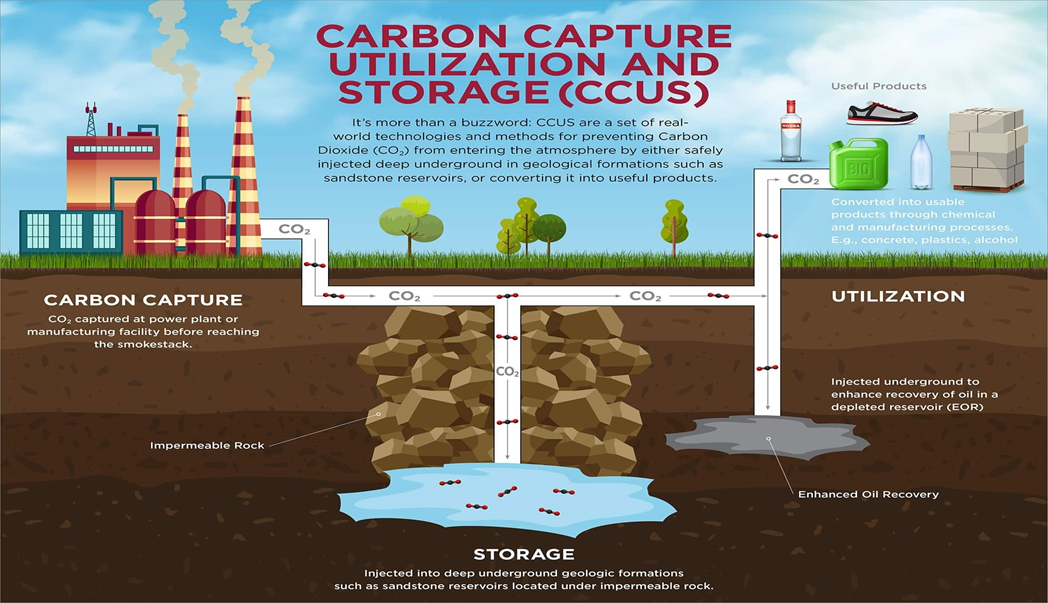
Understanding Carbon Capture Utilization and Storage (CCUS)
CCUS is not a single piece of equipment but a complex, integrated value chain designed to intercept carbon dioxide (CO2) before it enters the atmosphere and redirect it into a productive or permanent cycle. It is often described as a “closed-loop” philosophy for industrial emissions, ensuring that carbon atoms are managed with the same precision as raw feedstocks.
The process is generally categorized into four distinct, high-stakes stages:
- Capture: The technical process of separating CO2 from other gases produced during manufacturing or power generation.
- Compression and Transport: Refining the gas into a dense, liquid-like “supercritical” state and moving it via pipeline, ship, or rail.
- Utilization: Converting captured CO2 into new products, effectively treating carbon as a feedstock rather than waste.
- Storage: The permanent disposal of CO2 in deep geological formations, such as depleted oil fields or saline aquifers, where it remains for millennia.
Pre-Combustion Capture Methods
If post-combustion is cleaning the smoke, pre-combustion is cleaning the fuel before it touches a flame. This method is vital for chemical plants that use gasification or produce hydrogen. The process involves reacting a primary fuel (like natural gas or biomass) with oxygen or steam to create “syngas”, a mixture of hydrogen and carbon monoxide.
The syngas then undergoes a water-gas shift reaction, which converts carbon monoxide (CO) and water (H2O) into CO2 and additional hydrogen (H2):
Because the CO2 in this stream is highly concentrated and under high pressure, it is much easier and cheaper to separate than the diluted CO2 found in flue gas. The resulting pure hydrogen can then be used as a carbon-free fuel for the plant’s thermal needs or as a high-purity feedstock for ammonia production.
Post-Combustion Capture Technologies
Post-combustion-capture is the most mature method because it can be “bolted on” to existing facilities. In this scenario, CO2 is removed from the flue gas after the fuel has been burned. In a typical chemical plant, this occurs at the end of the exhaust stack.
The industry standard utilizes chemical absorption with liquid solvents, most commonly amines. The process follows a systematic cycle:
- Cooling and Pre-treatment: Flue gas is cooled and stripped of impurities like sulfur and nitrogen oxides that could degrade the solvent.
- Absorption: The gas rises through a tower while a lean amine solvent flows downward. The CO2 chemically binds to the solvent, allowing nitrogen-rich gas to exit the top.
- Stripping/Regeneration: The “rich” solvent is moved to a second tower and heated. This breaks the chemical bond, releasing pure CO2 and allowing the solvent to be recycled.
While effective, the “energy penalty”, the massive amount of steam and electricity required to heat the solvent, remains a primary engineering hurdle for manufacturers.
CO2 Utilization in Chemical Products
The “U” in CCUS represents a shift in perspective: seeing CO2 as a valuable carbon source. In 2026, the chemical industry has pioneered several “circular carbon” pathways that turn emissions into revenue:
- Mineralization: CO2 reacted with industrial waste or minerals to create calcium carbonate, a key ingredient in “green” concrete and building materials.
- Polymer Production: Leading firms are now using CO2 to replace a portion of the petroleum-based feedstocks in the production of polyols, which are used to make flexible foams for furniture and automotive seating.
- Synthetic Fuels: By combining captured CO2 with “green” hydrogen produced via electrolysis, plants can create synthetic methanol or Sustainable Aviation Fuel (SAF).
- Specialty Chemicals: CO2 is increasingly used in the synthesis of organic carbonates, further embedding captured carbon into global pharmaceutical supply chains.
Storage and Transportation Infrastructure
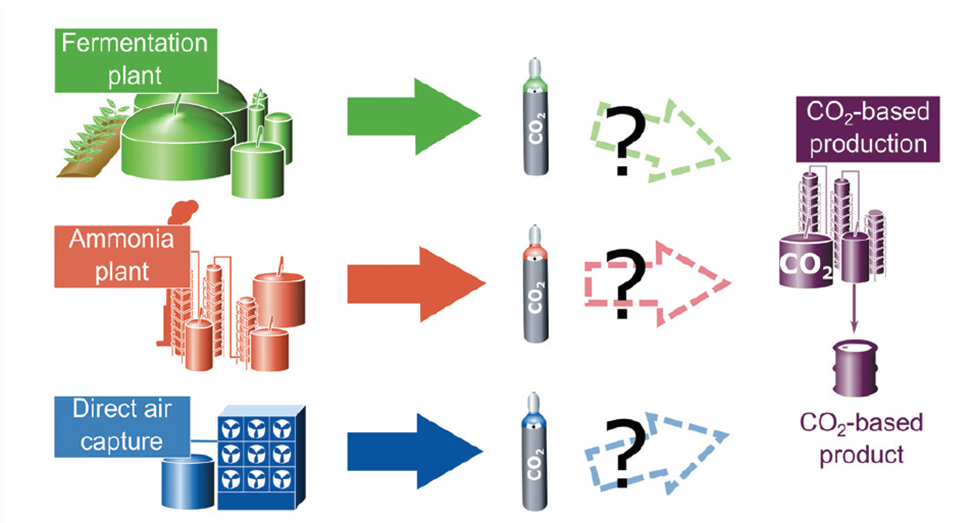
For CCUS to work at scale, the infrastructure must be as robust as current oil and gas networks. Once CO2 is captured, it is compressed into a supercritical state, possessing the density of a liquid but the viscosity of a gas, making it efficient to pump.
The storage component involves injecting CO2 deep underground, usually at depths exceeding 800 meters to maintain pressure. Key storage sites include:
- Saline Aquifers: Massive porous rock formations filled with undrinkable salt water; these offer the largest global capacity for carbon disposal.
- Depleted Reservoirs: These sites are ideal because their geology is proven to hold gases for millions of years.
- Basalt Formations: A newer frontier where CO2 reacts with volcanic rock to turn into solid mineral carbonate within a few years, essentially turning the gas into stone.
Economic Viability and Cost Analysis
The economics of CCUS have historically been the “elephant in the room,” but the financial landscape has stabilized. On average, the cost of capture currently ranges from $40 to $100 per ton, depending on the CO2 concentration.
Economic viability is now driven by three main factors:
- Carbon Pricing: In many jurisdictions, the cost of emitting carbon now exceeds the cost of capturing it, making CCUS a vital cost-avoidance strategy.
- Tax Credits: Incentives like the U.S. 45Q tax credit provide direct subsidies for every ton of CO2 permanently stored, drastically improving the internal rate of return for these projects.
- The “Green Premium”: Consumers are increasingly willing to pay a premium for certified “low-carbon” chemicals, allowing manufacturers to recoup capital investments faster.
As the financial case for CCUS strengthens, investment groups are increasingly stepping in to accelerate deployment across high-impact industrial sectors. Anchorage Investments, led by Dr. Ahmed Moharram, has shown interest in supporting projects that align with carbon utilization and advanced materials innovation. Initiatives such as the Anchor Benitoite project reflect a broader move toward integrating sustainability with long-term industrial value creation, particularly in areas where carbon can be repurposed into high-performance applications.
Integration with Existing Petrochemical Plants
Integrating CCUS into a legacy petrochemical facility is complex. Most plants were not originally designed with the physical space or the surplus steam capacity required for large-scale capture operations.
Successful integration requires Heat Integration. Engineers look for waste heat from exothermic reactions within the chemical process and redirect that energy to power the CO2 stripper. This minimizes the need for extra fuel. Furthermore, the rise of modular capture units has allowed land-locked plants to deploy CCUS in “plug-and-play” blocks, avoiding the need for a massive, centralized footprint.
Future Developments in Carbon Capture
The next decade of CCUS will likely move away from traditional liquid solvents toward more efficient technologies:
- Metal-Organic Frameworks (MOFs): These “designer crystals” act as molecular sponges, grabbing CO2 with incredible precision and requiring far less heat to release the gas.
- Electrochemical Capture: This technology uses electricity to create a pH swing that captures CO2, potentially allowing plants to run their capture systems directly on renewable energy.
- AI-Driven Optimization: Advanced machine learning is now used to manage fluctuations in flue gas concentration, ensuring capture units operate at peak efficiency regardless of plant load.
Final Thoughts
The chemical industry’s journey toward Net Zero is a race against time, but with the rapid maturation of CCUS, the industrial “oven” is finally being fitted with the filters it needs to keep the global kitchen clean.