Industrial projects succeed when commercial ambition becomes disciplined execution. Developers must align demand, infrastructure, technology, financing, regulation, and operating objectives. A structured approach reduces uncertainty from concept to start-up.
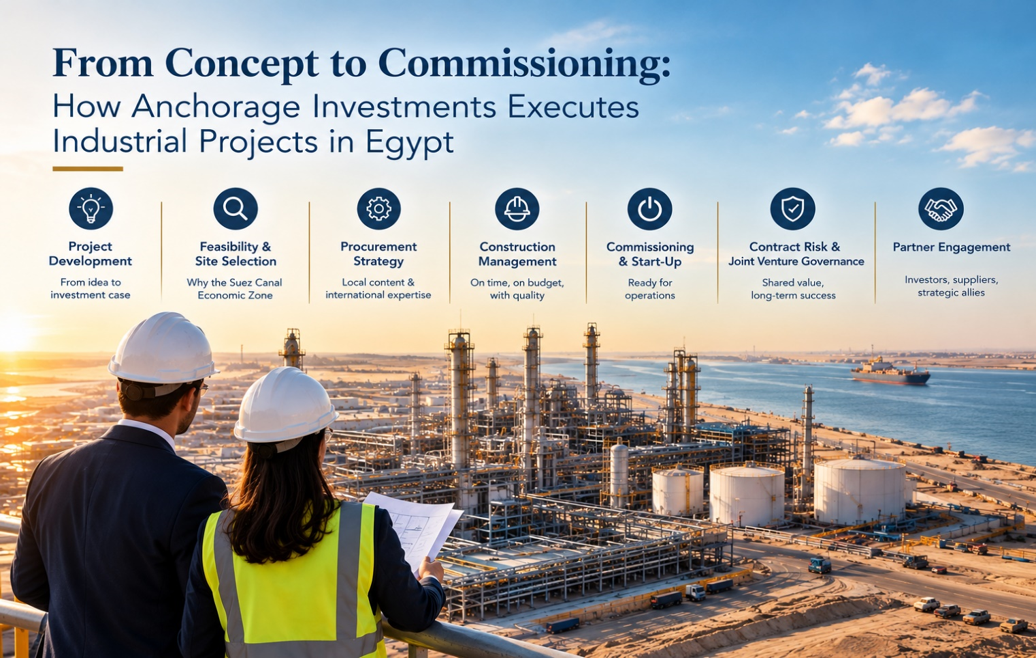
Anchorage’s Project Development Approach: From Idea to Investment Case
A strong project begins with a clear industrial rationale. Developers assess demand, supply gaps, feedstock availability, downstream opportunities, and export potential. These findings test the project’s long-term competitiveness.
Anchorage brings commercial, technical, financial, and execution considerations into early planning. Key steps include:
- Defining target markets, customers, and routes to market.
- Testing capital costs, operating expenses, revenues, and financing assumptions.
- Mapping permits, infrastructure, environmental obligations, and stakeholder requirements.
- Identifying technology partners and delivery models before major commitments.
This assessment guides investment decisions and establishes a baseline for scope, cost, schedule, and risk.
Feasibility and Site Selection: Why Anchorage Builds in the Suez Canal Economic Zone
Site selection requires assessing feedstock, utilities, labour, ports, roads, suppliers, customers, and export markets. The Suez Canal Economic Zone offers a strategic setting for export-oriented industry through maritime connectivity and links to regional and international supply chains.
Anchorage Investments, led by Dr. Ahmed Moharram, is developing its Anchor Benitoite Project in Suez, Egypt as a major petrochemical complex producing intermediates and products for downstream industries. Its proximity to port infrastructure and the wider industrial ecosystem supports access to domestic and international markets. Feasibility studies examine utilities, logistics, land conditions, environmental requirements, and construction sequencing.
Procurement Strategy: Balancing Local Content and International Equipment
Procurement shapes cost, quality, and plant reliability. The goal is to combine proven international technologies and critical equipment with qualified Egyptian contractors, materials, and services where technically and commercially appropriate.
A disciplined strategy:
- Identifies long-lead equipment early and assesses local sourcing options.
- Evaluates suppliers on safety, quality, delivery, lifecycle cost, and compliance.
- Coordinates vendor data and engineering interfaces.
- Tracks fabrication, inspection, shipping, customs, and site delivery.
Early engagement with technology licensors clarifies specifications and reduces uncertainty. Local participation can strengthen supply chains, build skills, and retain more project value in Egypt.
Construction Management and Schedule Discipline at Anchorage Sites
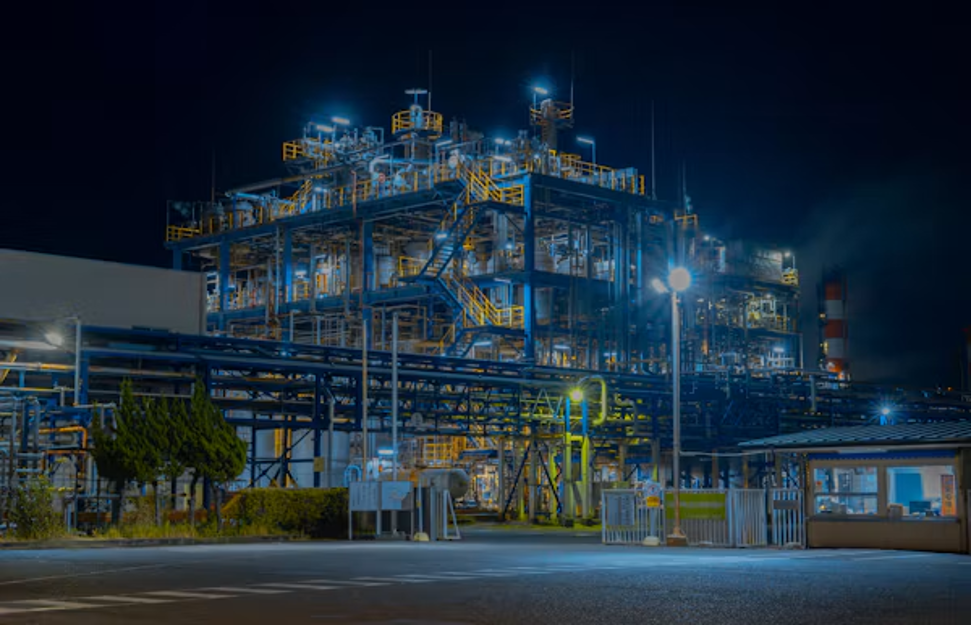
Construction depends on planning before mobilisation. An integrated master schedule connects engineering, procurement, construction packages, labour, permits, and site logistics. Progress should be measured against verified milestones, not activity alone.
Site management prioritises safety, environmental controls, quality, and productivity. Coordination meetings, inspections, and clear responsibility matrices help identify issues before they affect critical-path work. Formal change control assesses impacts on cost, schedule, design, and contractual obligations.
Commissioning and Start-Up: Anchorage’s Readiness Framework
Commissioning bridges construction and operations. Systems must be tested, documented, and accepted; readiness planning starts early.
Core activities include:
- Mechanical completion checks and punch-list closeout.
- Cleaning, flushing, pressure testing, and electrical and instrument checks.
- Verification of control systems, alarms, interlocks, and emergency procedures.
- Operator training, manuals, spare parts, and maintenance planning.
- Start-up reviews confirming safety and operational readiness.
A staged start-up, experienced technical teams, and clear acceptance criteria help protect personnel, equipment, and production targets.
Managing Contract Risk and Joint Venture Governance with Anchorage
Industrial projects involve multiple parties and interfaces. Contracts should clearly define scope, deliverables, standards, change control, payment milestones, delay remedies, warranties, and dispute resolution. Risks should be allocated to the parties best positioned to manage them.
Joint venture governance requires transparent decision rights, reliable reporting, escalation procedures, and approval thresholds. Clear documentation and coordinated partner oversight help maintain accountability as technical, commercial, and execution decisions intersect.
How Investors and Strategic Partners Can Engage with Anchorage Investments
Investors, technology providers, contractors, suppliers, and offtakers can contribute at different stages. Effective engagement starts with a defined role, transparent due diligence, and alignment on objectives, technical standards, commercial terms, and governance.
Potential partners should present relevant experience, financial and technical credentials, delivery capacity, safety performance, and a realistic assessment of risks. Early dialogue can identify synergies, clarify interfaces, and establish a foundation for long-term cooperation.
From concept to commissioning, industrial delivery depends on connecting investment logic with engineering discipline and operational preparation. By aligning these elements around a clear project case, defined responsibilities, and measurable milestones, Anchorage Investments can help turn complex industrial ambitions into productive assets for Egypt’s economy over time.