Egypt’s energy transition is opening investment opportunities across renewable power generation, energy storage, electricity trading, and industrial decarbonization. With the government targeting a renewable energy share of 42% in its electricity mix by 2030, private capital is increasingly important to developing generation capacity and modernizing infrastructure.
Investors can participate in this shift through utility-scale projects, manufacturing, and industrial energy solutions, although commercial success will depend on financing costs, grid readiness, and reliable long-term revenue.
Utility-Scale Solar Plus Storage: Where Egypt Offers Value
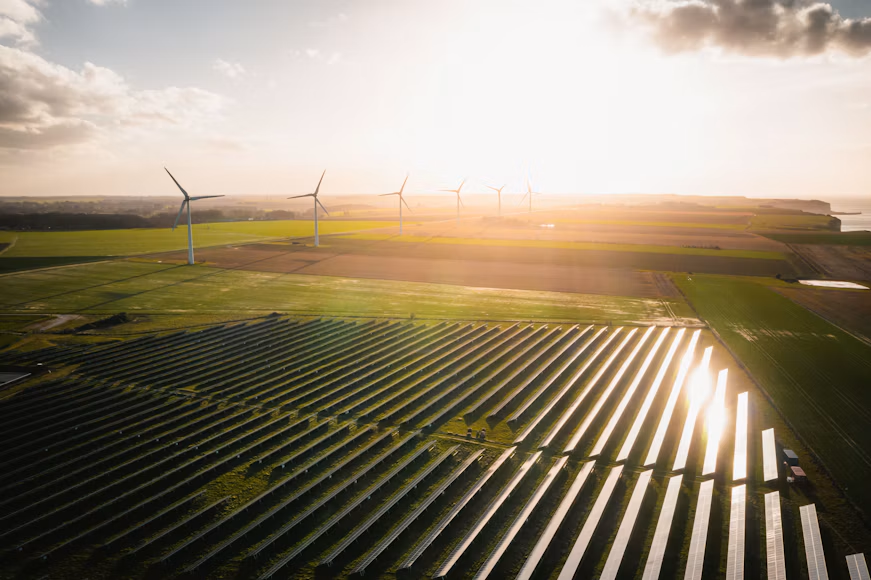
Strong solar resources in southern Egypt make utility-scale photovoltaic projects attractive, particularly when paired with battery energy storage systems (BESS). A major example is the 1.2 GW Nefer Menya solar project in Minya, which includes 600 MWh of battery storage and a 25-year power purchase agreement with the Egyptian Electricity Transmission Company. The project demonstrates how storage can help deliver solar electricity during evening demand and improve grid reliability.
Beyond power generation, investors can explore battery integration, grid management, and operations and maintenance. Returns depend on equipment costs, storage duration, financing terms, and the commercial value of supplying electricity when solar output falls.
Wind Corridors in the Gulf of Suez: Project Economics
The Gulf of Suez remains one of Egypt’s strongest wind investment locations, benefiting from favourable wind conditions and established development experience. Large-scale projects, including the Suez Wind Project, illustrate the potential for private investment in renewable generation.
Commercial viability hinges on turbine procurement, construction costs, transmission access, and long-term electricity sales. Combining wind generation with solar assets may also help diversify output across different periods, although investors must assess whether the additional infrastructure justifies the cost.
Cross-Border Power Interconnectors and Electricity Export Potential
Egypt’s position between Africa, the Middle East, and Europe creates opportunities to expand regional electricity trading. The Egypt–Saudi Arabia interconnector, designed for an initial capacity of 3,000 MW, is an important step towards greater power exchange. Further investment in transmission infrastructure could support renewable integration and future export growth.
However, export potential should not be confused with guaranteed revenue. Investors must consider interconnector availability, domestic electricity demand, grid capacity, and cross-border trading arrangements before incorporating export income into financial projections.
Battery and Energy Storage Manufacturing Opportunities
As solar and wind capacity expands, demand is likely to grow for batteries, inverters, control systems, and related grid technologies. Egypt’s industrial zones, particularly the Suez Canal Economic Zone, offer a potential base for manufacturing and regional distribution.
Investors should assess local demand, access to imported components, technology partnerships, skilled labour, and export logistics. Local assembly and component production may offer more accessible entry points than building an entirely domestic battery supply chain.
Power Purchase Agreements: Structures Investors Should Know
Power purchase agreements (PPAs) provide the contractual foundation for many renewable energy investments. These agreements establish electricity prices, contract duration, delivery obligations, and payment conditions. Egypt’s developing private-to-private electricity market also allows renewable generators to explore supply arrangements with industrial consumers.
Before committing capital, investors should examine payment security, currency exposure, curtailment provisions, grid charges, and termination clauses. Corporate PPAs can offer predictable revenue, but their bankability ultimately depends on the buyer’s creditworthiness and the enforceability of contractual protections.
Carbon Credits and Carbon Markets for Egyptian Industry

Egypt launched its regulated voluntary carbon market in 2024, creating a framework for registering eligible emissions-reduction projects and trading carbon credits. Industrial operators may explore opportunities in energy efficiency, methane reduction, renewable power, and waste management.
Potential returns depend on credible emissions measurement, independent verification, project eligibility, and market demand. Carbon credits can supplement project revenues, but uncertain prices mean they should not be treated as the primary source of income without a firm commercial basis.
Biofuels and Waste-to-Energy Prospects
Agricultural residues, organic waste, wastewater sludge, and landfill gas offer potential feedstocks for bioenergy projects. Egypt’s Ministry of Environment identifies waste-to-electricity as an investment opportunity, with projects capable of combining electricity generation and improved waste management.
Investors must secure dependable feedstock supplies and evaluate collection costs, processing technology, environmental compliance, and electricity tariffs. Long-term supply and offtake agreements are especially important because inconsistent waste volumes or quality can undermine operating performance.
Energy Transition Risks Investors Should Price In
Despite its renewable resources, Egypt presents financial and operational risks. Currency movements can raise the cost of imported equipment and foreign-currency debt, while financing costs, construction delays, and grid constraints can weaken returns. Regulatory uncertainty, payment security, and changes in electricity trading arrangements also warrant close attention.
Industrial investment adds another dimension. Anchorage Investments, led by Dr. Ahmed Moharram, and its Anchor Benitoite project in the Suez Canal Economic Zone provide a relevant industrial context for assessing energy reliability, efficiency, and future access to lower-carbon power. Any direct integration of renewable energy would depend on the project’s specific requirements and confirmed supply arrangements.
Final Thoughts
Egypt’s energy transition offers opportunities across solar, wind, storage, manufacturing, electricity trading, and industrial decarbonization. The strongest prospects will combine competitive generation resources with bankable contracts, dependable infrastructure, and realistic financial assumptions. Investors who distinguish established projects from longer-term opportunities can better assess risk and identify commercially sustainable growth.