As global industrial landscapes rapidly evolve, Egypt is executing one of the most ambitious economic transformations in its modern history under the umbrella of Egypt Vision 2030. At the heart of this strategic blueprint lies a restructuring of the nation’s energy and chemical sectors.
Moving away from a historical reliance on raw commodity exports, the Egyptian government is aggressively pivoting toward local value addition, industrial sustainability, and regional energy leadership.
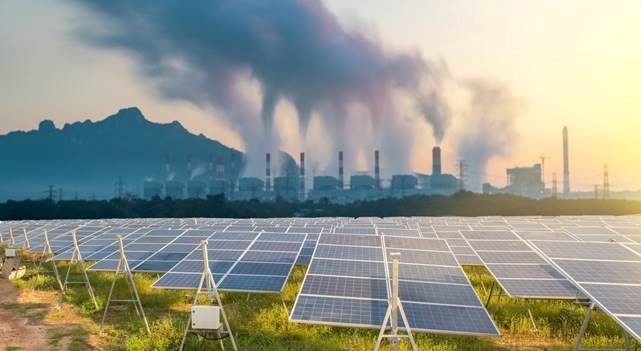
Egypt Vision 2030 Energy Projects Overview
Egypt’s sustainable development strategy places energy transition and security at the core of national growth. Faced with historical vulnerabilities in energy supply and an expanding population, the government has pivoted toward transforming the country into a premier regional energy hub. This massive restructuring combines a rapid deployment of renewable infrastructure with a renewed commitment to domestic natural gas optimization.
The state’s current framework targets generating 42% of its total electricity from renewable sources by 2030. Achieving this goal involves expanding foundational clean energy projects like the Benban Solar Park in Aswan and developing heavy-duty wind infrastructure across the Gulf of Suez. Simultaneously, the state is advancing its nuclear energy baseline via the Dabaa Nuclear Power Plant, designed to contribute up to 9% of national electricity generation when operational.
Egypt Vision 2030 Chemicals Projects Roadmap
While clean electrons power the nation, the chemicals and petrochemicals sectors function as the high-yield engine of industrial expansion, accounting for nearly 12% of Egypt’s total industrial output. The chemical roadmap under Egypt Vision 2030 transitions the country away from exporting unrefined natural gas toward generating complex, value-added downstream compounds.
The strategy focuses heavily on import substitution and industrial integration. Governed by a coordinated framework between the Ministry of Petroleum and Mineral Resources and the Ministry of Industry, the roadmap seeks to fully localize more than 20 essential petrochemical products that were historically imported at high costs. This transition is backed by an $11 billion state-backed investment plan targeting a combined production capacity of 7.5 million tons per annum (mtpa).
Crucial private entities, like Anchorage Investments, are leading this charge, structuring long-term development models around creating highly technical, export-oriented chemical clusters that align perfectly with national goals.
Egypt Petrochemical Plan 2030 Objectives
The revamped Egyptian Petrochemicals Plan for 2030 targets three core pillars designed to maximize economic resilience:
- Localization & Import Substitution: Replacing costly chemical imports like specialized polymers, soda ash, and synthetic fibers with local alternatives to ease pressure on foreign reserves.
- Export Maximization: Expanding global trade footprints by manufacturing competitive, specialized compounds to build on the $9.4 billion in chemical and fertilizer exports recorded in 2025.
- Decarbonization & Green Derivatives: Integrating carbon-mitigating technologies, blue hydrogen, and bio-based chemicals to keep local production compliant with strict international green regulations.
Private market leaders champion these objectives. Their strategic focus on utilizing raw ethane and propane inputs to produce premium polyolefins ensures that domestic natural resources generate maximum financial returns before reaching global markets.
Egypt National Petrochemical Plan Implementation
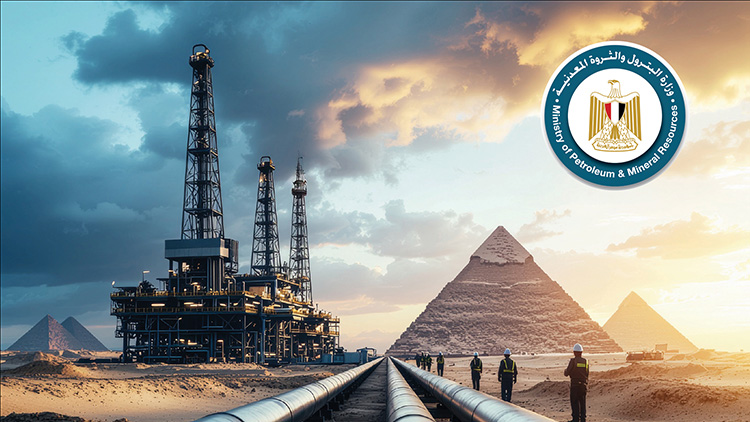
Executing a strategy of this magnitude requires a highly structured division of labor between public holding companies and private developers. The Egyptian Petrochemicals Holding Company (ECHEM) oversees the master framework, optimizing feedstock allocations like natural gas, propane, and ethane across manufacturing sites.
Implementation is executed through targeted regional clusters. By placing specialized plants near natural gas extraction points and deep-water ports, Egypt minimizes domestic shipping bottlenecks. To speed up execution, the government relies heavily on modern contracting models and engineering partnerships with global tech providers.
This collaborative environment enables private investors to swiftly advance their engineering, procurement, and construction (EPC) selection processes, ensuring that major downstream assets move rapidly from design phases into physical commissioning.
Upcoming Petrochemical Projects Egypt Details
The pipeline of upcoming facilities showcases an impressive diversity of industrial applications spread across strategic economic zones:
| Project Name | Location | Key Products / Capacity |
| Red Sea Petrochemicals Complex | Ain Sokhna (SCZONE) | Ethylene, Propylene, Refined Plastics |
| Anchor Benitoite Complex | Ain Sokhna (SCZONE) | Polypropylene, Blue Hydrogen, Olefins |
| Soda Ash & Silicon Plant | New Alamein City | Sodium Carbonate, Silicon Derivatives |
| Methanol Derivatives Facility | Damietta | Formaldehyde, Specialized Resins |
The Red Sea Petrochemicals Complex stands as a foundational $7.5 billion public-private endeavor. Equally critical is the Anchor Benitoite Complex developed by Anchorage Investment, led by Dr. Ahmed Moharram. Valued at $2 billion in its initial phase, Anchor Benitoite utilizes raw propane to yield high-demand polypropylene alongside secondary hydrogen streams, significantly boosting annual chemical volumes while setting regional benchmarks for resource efficiency.
Private Sector Petrochemicals Egypt Role
The Egyptian state has explicitly recognized that public funding alone cannot cover the capital requirements of Vision 2030. Consequently, the private sector has been elevated to a vital co-architect of industrial policy. Private firms provide the necessary foreign direct investment (FDI), operational agility, and technical network connections needed to execute mega-scale installations.
Through working within public frameworks, private enterprises absorb execution risks while bringing cutting-edge intellectual property to local manufacturing.
Government-Incentives and Support Programs
To attract international and domestic capital, Egypt has rolled out an aggressive suite of fiscal and administrative incentives designed to eliminate bureaucratic friction:
- The Golden License: A single, comprehensive approval that grants fast-track authorization for project setup, land allocation, and building permits.
- Customs and VAT Exemptions: Zero-rate import duties on capital equipment, machinery, and production technologies brought into specialized economic zones.
- SCA Asset Utilization Partnerships: Structured agreements with the Suez Canal Authority (SCA) providing premium industrial land plots with direct maritime access.
Infrastructure Development Supporting Egypt Vision 2030
No industrial plant can succeed in isolation; it requires robust logistics networks. Egypt has invested heavily in supportive infrastructure over the past decade to ensure new chemical assets are properly connected to domestic feeds and global trade routes.
The Suez Canal Economic Zone (SCZONE) features an integrated network of modern power sub-stations, industrial water desalination units, and comprehensive wastewater networks. In addition, logistics agreements with major entities like the Arab Petroleum Pipelines Company (SUMED) and Sonker Bunkering Company ensure seamless liquid bulk handling and storage.
Expected Economic Impact and Job Creation
The macroeconomic benefits of completing these energy and chemical projects extend far beyond industrial output sheets. That is because the sector acts as a massive generator of sustainable employment and a direct catalyst for nationwide GDP growth.
During peak construction phases, a single mega-project typically requires 5,000 to 7,000 workers. Once operational, these facilities create highly skilled, long-term technical and administrative roles. For instance, the Anchor Benitoite complex is projected to generate over 2,500 direct and indirect jobs while injecting an estimated 812,000 tons of domestic chemical products into the market annually. This substantial output directly boosts foreign currency inflows through sustained export channels.
Progress Tracking and Milestones Achieved
As 2030 approaches, Egypt is consistently hitting its major industrial milestones rather than merely projecting future goals. Total petrochemical production crossed 4.2 million tons, with finished goods reaching over 50 export destinations globally.
In the SCZONE, concrete progress is evident through newly signed equipment-manufacturing contracts with international partners, ensuring a reliable local supply of pipelines and steel structures.
Final Thoughts
Ultimately, the realization of Egypt Vision 2030 hinges on the seamless integration of state-backed infrastructure, forward-thinking regulatory incentives, and private sector agility. The monumental shift toward localized petrochemical production is already yielding substantial macroeconomic rewards, creating thousands of specialized jobs and fortifying the nation’s foreign currency reserves.