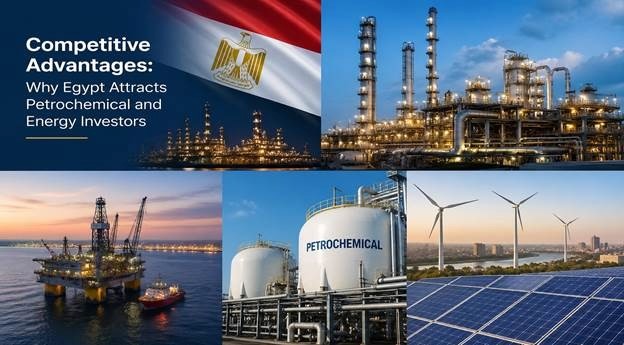
As the global energy landscape continues to evolve, Egypt has positioned itself as a key destination for investment in the petrochemical and energy sectors. Its combination of geographic advantage, resource availability, and ongoing economic reform creates a strong foundation for industrial growth.
For investors, Egypt offers a balanced proposition. It combines market access, cost efficiency, and long-term scalability, making it well suited for large-scale energy and petrochemical projects.
Strategic Geographic Location for Investors
Egypt’s location at the intersection of Africa, Asia, and Europe provides a clear logistical advantage. This positioning allows companies to move raw materials and finished products across major markets with reduced transit times and lower shipping costs.
The country’s dual access to the Mediterranean and the Red Sea creates flexible trade routes. For petrochemical operations, this means efficient import of inputs and streamlined export of finished products. Compared to more remote production bases, Egypt offers a more connected and cost-effective platform for international trade.
Access to European and Asian Markets
The Suez Canal remains a central pillar of Egypt’s trade infrastructure. It facilitates a significant share of global shipping traffic, making it one of the most important maritime routes worldwide.
This connectivity allows Egyptian producers to serve multiple markets efficiently. European markets are accessible through the Mediterranean, where demand continues to grow for fertilizers, plastics, and emerging energy solutions. At the same time, the Red Sea provides direct routes to Asia’s high-growth economies, including India and China.
This dual access allows companies to adjust export strategies in response to market conditions, improving flexibility and reducing commercial risk.
Natural Gas Reserves Supporting Energy and Petrochemicals
The discovery of the supergiant Zohr-natural-gas-field in the Mediterranean was a turning point for the Egyptian economy. Egypt has transitioned from a net importer of gas to a regional energy hub with a surplus that fuels its domestic industry.
Natural gas is the lifeblood of the petrochemical industry, serving both as an energy source and a primary feedstock. Egypt’s proven reserves provide a secure, long-term supply of:
- Methane: Essential for the production of ammonia, urea, and methanol.
- Ethane and Propane: The building blocks for ethylene and propylene, which are further processed into the plastics and fibers used globally.
This domestic availability mitigates the risks of global supply chain disruptions and ensures that large-scale plants can operate at high capacity factors without fear of feedstock shortages.
Competitive Energy Costs for Chemical Production
Energy pricing remains a key factor in the competitiveness of chemical manufacturing. Egypt offers relatively competitive energy costs, supported by domestic gas production and a diversified energy mix.
The ongoing expansion of renewable energy also contributes to long-term stability. With clear targets to increase the share of renewables, the country is working to ensure a more balanced and reliable energy system.
For investors, this translates into lower operating costs and improved margins, particularly when compared to higher-cost markets.
Growing Domestic Market for Chemicals Egypt
While export potential is a major draw, the domestic Egyptian market is a powerhouse in its own right. With a population exceeding 105 million people and a rapidly expanding middle class, the internal demand for manufactured goods is surging.
- Construction: The development of the New Administrative Capital and dozens of other “fourth-generation” cities has created a massive demand for PVC pipes, insulation materials, and paints.
- Agriculture: As one of the world’s largest agricultural producers, Egypt has a permanent and growing need for nitrogen-based fertilizers.
- Packaging: The rise of e-commerce and organized retail is driving the demand for polyethylene and polypropylene packaging solutions.
Investing in Egypt allows companies to “play both sides”—fulfilling a massive local demand while using the surplus to capture international market share.
Skilled Workforce Availability
Egypt boasts a large, youthful, and increasingly specialized labor pool. With dozens of public and private universities producing over 600,000 graduates annually, the country provides a steady stream of engineers, chemists, and technicians.
- Technical Expertise: Egypt has a century-long history in the oil and gas industry, meaning the “industrial DNA” required for complex petrochemical operations is already present in the workforce.
- Cost-Effectiveness: Compared to the labor markets in Europe or the Gulf, Egypt offers a highly skilled workforce at a competitive wage point, significantly lowering the operational expenditure (OPEX) for large-scale industrial projects.
Free Trade Agreements Benefiting Exporters
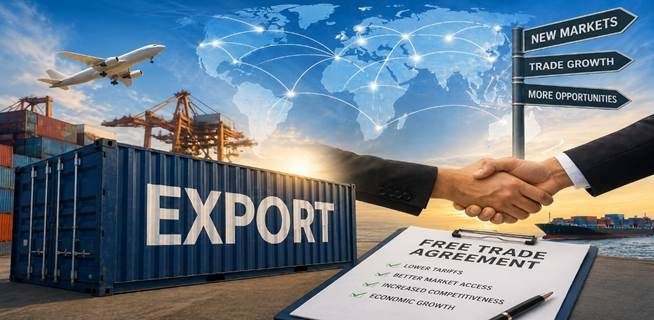
One of Egypt’s most strategic advantages is its web of Free Trade Agreements (FTAs), which provide duty-free access to over 2 billion consumers globally. Key agreements include:
- GAFTA (Greater Arab Free Trade Area): Seamless access to the Middle Eastern markets.
- COMESA & AfCFTA: Opening the doors to the rapidly growing African continent.
- The EU-Egypt Association Agreement: Allowing Egyptian manufactured goods to enter Europe without burdensome tariffs.
- Agadir Agreement: Facilitating trade between Egypt, Jordan, Morocco, and Tunisia.
These treaties essentially allow a company based in Egypt to treat half the world as its “local market,” bypassing the protectionist barriers that often hinder international trade.
Port Infrastructure and Logistics Advantages
The Egyptian government has funneled billions of dollars into the Suez Canal Economic Zone (SCZONE) and the modernization of its ports.
- Ain Sokhna & East Port Said: These are world-class facilities designed specifically to handle the specialized needs of the energy and chemical sectors, including bulk liquid terminals and integrated logistics hubs.
- Multi-modal Connectivity: Investment in high-speed rail and expanded highway networks ensures that goods can move from the factory floor to the ship’s hull with maximum efficiency.
The integration of “Dry Ports” in the interior of the country further streamlines the customs process, reducing the time-to-market for investors.
Political Stability and Economic Reforms
Since the mid-2010s, Egypt has undergone a rigorous economic reform program backed by the IMF. These reforms have focused on:
- Legislative Updates: The New Investment Law (Law No. 72 of 2017) provides significant incentives, including tax breaks, “Golden Licenses” for fast-tracked approvals, and guarantees against nationalization.
- Currency Liberalization: Moving toward a flexible exchange rate has improved market transparency and eased the repatriation of profits for foreign firms.
- Infrastructure Spending: The government has prioritized the “State Ownership Policy,” which defines the sectors where the state will exit to make room for private sector leadership, particularly in energy and chemicals.
This evolving investment climate has also attracted private sector players focused on long-term industrial value creation. Anchorage Investments, led by Dr. Ahmed Moharram, is among the groups engaging with opportunities in Egypt’s energy and petrochemical landscape. Through initiatives such as the Anchor Benitoite project, the firm reflects a broader trend of aligning capital with infrastructure, advanced materials, and sustainability-driven industrial growth in the region.
Testimonials from Successful Investors in Petrochemicals and Energy Egypt
Investor experience reflects the progress made in the sector. Companies operating in Egypt highlight the efficiency of project execution, improved regulatory processes, and access to regional markets as key advantages.
Faster approvals, integrated infrastructure, and the ability to export competitively have all contributed to positive investment outcomes. These experiences reinforce Egypt’s position as a practical and scalable destination for energy and petrochemical projects.
Final Thoughts
Egypt continues to strengthen its position within the global energy and petrochemical landscape. Its combination of strategic location, resource availability, infrastructure development, and policy reform creates a supportive environment for investment.
As energy markets become more interconnected, the ability to operate efficiently across regions becomes increasingly important. Egypt offers that flexibility, alongside the scale required for long-term growth.
For investors seeking a stable and competitive base, the country presents a clear and well-supported opportunity.