Egypt’s chemical industry is gaining importance as the country works to expand industrial production and increase the value of its exports. Its geographic position, established manufacturing base, access to major shipping routes, and extensive network of trade agreements give Egyptian chemical producers a strong platform for reaching international markets.
Turning these advantages into sustained export growth, however, requires more than increasing production. Exporters need to identify the markets where their products are most competitive, build dependable relationships with international buyers, meet increasingly demanding quality requirements, and avoid excessive reliance on any single destination.
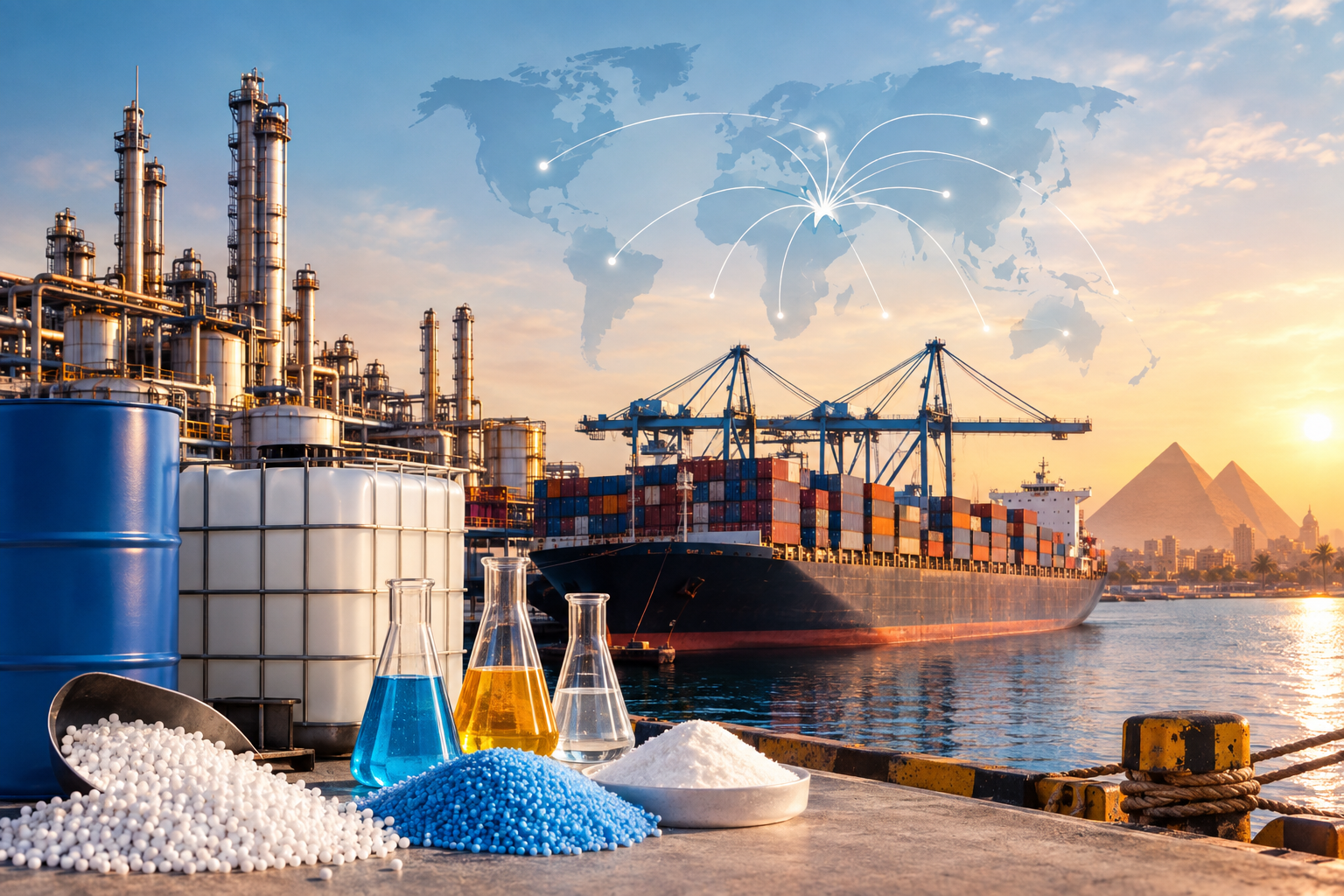
Mapping Chemical Export Opportunities from Egypt to Key Markets
Egypt’s location between Europe, Africa, and Asia creates several routes for expanding chemical exports. European markets offer access to sophisticated industrial supply chains, while neighboring Arab and African economies provide opportunities where geographic proximity can make Egyptian products particularly competitive.
Product selection should play a central role in this process. Fertilizers, polymers, petrochemical derivatives, and other chemical products each serve different industries and face different regulatory requirements. Rather than approaching international markets as a single category, Egyptian producers can identify specific applications where local production capabilities, raw material availability, and logistics provide an advantage.
The Suez Canal also strengthens this proposition. Export-oriented chemical facilities located close to major ports can serve multiple regions while reducing the logistical complexity associated with long-distance distribution.
Building Long-Term Buyer Relationships in International Chemical Trade
Winning an initial export order is only the beginning. Chemical buyers typically place significant importance on consistency because changes in product specifications or delivery schedules can affect their own manufacturing processes.
Reliable quality, transparent documentation, responsive technical support, and predictable delivery therefore become important commercial differentiators.
Long-term relationships can also provide valuable insight into changing customer requirements. Direct engagement with industrial buyers allows Egyptian producers to understand upcoming demand, develop products around specific applications, and identify opportunities to move into higher-value segments.
Free Trade Agreements Benefiting Egyptian Chemical Exporters
Egypt’s network of trade agreements provides another important advantage for chemical exporters. Agreements covering markets and blocs can provide preferential market access for qualifying products.
The commercial benefit depends on the individual product, tariff classification, and applicable rules of origin. Exporters should therefore assess trade agreements as part of their market-selection strategy, identifying where preferential treatment can improve the competitiveness of Egyptian-made chemicals.
Diversifying Export Markets to Reduce Buyer Concentration Risk

A strong export strategy should not depend on a limited number of buyers or destinations. Concentration can expose producers to sudden changes in regulations, commodity prices, currency conditions, or demand within a particular market.
Geographic diversification offers a way to manage that exposure. Egyptian chemical companies can build on their existing presence in Europe and the Middle East while exploring additional opportunities across Africa, Asia, and Latin America.
Quality Certifications That Open Doors to New Export Markets
International buyers increasingly expect suppliers to demonstrate consistent quality and responsible production practices. Recognized management standards such as ISO 9001 can help establish structured quality-control systems, while ISO 14001 provides a framework for environmental management.
Chemical exporters also need to account for market-specific regulations. European sales, for example, require close attention to the EU’s REACH framework and the documentation surrounding the safe use, classification, and handling of chemical substances.
Egypt’s Chemical Export Growth: Data and Trends to Watch
Egypt’s chemicals and fertilizers sector remains one of the country’s leading non-oil export categories, reflecting the depth of its industrial base and the growing importance of international markets.
The next stage of growth is likely to depend on moving further up the value chain. Expanding production capacity remains important, but developing more sophisticated petrochemicals, polymers, and specialty chemical products can create additional export opportunities while reducing reliance on lower-margin commodities.
Projects such as Anchor Benitoite, developed by Anchorage Investments, led by Dr. Ahmed Moharram, reflect this broader industrial direction. Located in the Suez Canal Economic Zone, the project is designed around large-scale petrochemical production and an export-oriented model that connects manufacturing capacity with Egypt’s strategic logistics infrastructure.
Ultimately, Egypt’s chemical export opportunity lies in combining what the country already does well with a more targeted approach to international trade. Strong infrastructure and market access provide the foundation; consistent quality, diversified buyers, regulatory readiness, and long-term commercial relationships can turn that foundation into sustained export growth.