Africa’s industrial landscape is evolving as manufacturers and global supply-chain players seek locations offering market access, infrastructure, skilled labor, and reliable operating conditions. Egypt stands out for its strategic location, established industrial base, transport infrastructure, and access to African, European, and Arab markets.
In 2026, Egypt continued expanding industrial investment opportunities through digital land allocation, including 1,272 fully serviced plots across 35 industrial zones in 23 governorates.
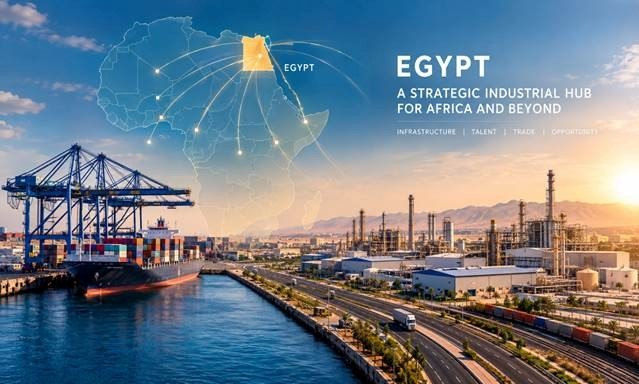
Comparing Egypt’s Industrial Zones to Other African Hubs
Egypt competes with several established and emerging African manufacturing locations, but the competitive proposition differs from one country to another.
- Morocco has developed strong manufacturing clusters linked to automotive, aerospace, and export-oriented industries, supported by proximity to European markets.
- South Africa offers one of the continent’s most diversified industrial economies, deep financial markets, established manufacturing capabilities, and a significant logistics base.
- Ethiopia has used industrial parks to attract manufacturing investment, particularly in labor-intensive industries, although challenges around local sourcing, skills, and infrastructure remain.
- Egypt combines a large domestic market with access to the Mediterranean, Red Sea, Suez Canal, and African markets.
Rather than competing on a single factor, Egypt’s proposition is built around the combination of location, industrial scale, logistics, energy infrastructure, and trade access.
What Makes an Industrial Zone Attractive to Investors?
For manufacturers, the decision to locate inside an industrial zone increasingly depends on the total operating environment rather than the price of land alone.
Investors typically assess:
- Availability and reliability of electricity, water, gas, and telecommunications.
- Proximity to ports, highways, railways, suppliers, and major consumer markets.
- Availability of industrial land and ready-to-use facilities.
- Licensing, customs, tax, and regulatory procedures.
- Workforce availability and technical skills.
- Opportunities to source inputs locally.
- Export incentives and access to trade agreements.
- Capacity to expand production over time.
Egypt’s industrial development framework increasingly emphasizes serviced land and simplified allocation procedures. In 2026, the IDA introduced a lease-to-own mechanism and digitalized industrial land allocation, with more than 300,000 square meters allocated in the first tender across eight industrial zones.
Benchmarking Ports, Roads, and Utilities Across Africa
Infrastructure is a key differentiator for industrial investment. Egypt has made significant investments in roads, ports, electricity, water, and logistics, while the Suez Canal Economic Zone combines industrial areas with ports, transport networks, utilities, and logistics infrastructure.
Across Africa, infrastructure varies widely. South Africa has a mature industrial and logistics base, Morocco benefits from strong links to European supply chains, while Ethiopia’s industrial parks highlight the importance of reliable utilities and domestic supply networks.
Labor Costs and Workforce Availability: Egypt vs. Regional Competitors
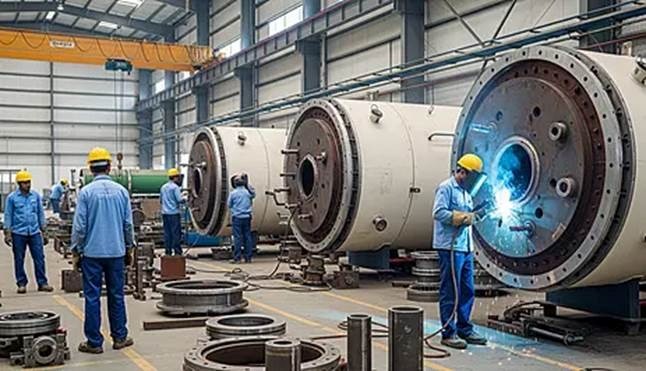
Labor cost remains relevant, particularly for textiles, food processing, assembly, chemicals, and other manufacturing activities. However, the lowest nominal wage does not automatically produce the lowest production cost.
Productivity, technical skills, employee turnover, training requirements, and management capabilities increasingly determine the real cost of labor. The World Bank has noted that African industrial competitiveness needs to move beyond wage competition toward more productive labor, technology adoption, skills, and stronger supplier ecosystems.
Egypt’s large population provides a broad labor pool, while its universities, technical institutions, and established manufacturing base provide potential access to engineers, technicians, operators, and professional services.
Regulatory Ease of Doing Business: A Comparative Look
Regulatory efficiency is another key consideration when comparing industrial zones. Investors generally prefer systems that reduce the number of separate government interfaces required to establish and operate a factory.
Egypt has been moving toward digital industrial land allocation and more streamlined procedures. The IDA is responsible for industrial land allocation as well as facilitating industrial licensing and registration.
Special economic zones can further simplify the investor journey. SCZONE, for example, promotes one-stop-shop services and integrated investment regulations alongside its industrial and port infrastructure.
The broader African comparison remains diverse, with countries pursuing different models ranging from special economic zones and industrial parks to export-processing zones and investment corridors.
Africa’s Growing Appetite for Industrial and Chemical Investment
Africa’s industrial opportunity is expanding beyond traditional light manufacturing. Investors are increasingly examining chemicals, pharmaceuticals, food processing, metals, fertilizers, automotive components, renewable-energy equipment, and other industries that can build domestic value chains.
Egypt is positioned within this shift through its established chemical, petrochemical, pharmaceutical, engineering, food, and building-material industries. The country’s 2026 industrial land offerings explicitly included chemical and pharmaceutical activities among targeted sectors.
This environment also creates opportunities for integrated industrial projects. Anchorage Investments, led by Dr. Ahmed Moharram, and its Anchor Benitoite Project in Suez, Egypt, illustrate how industrial investment can be connected to specialized production and the development of higher-value industrial activities.
Regional Trade Agreements Boosting African Industrial Competitiveness
Trade agreements are becoming increasingly important as companies design manufacturing footprints around regional rather than purely national markets.
Egypt benefits from a broad network of trade arrangements covering Africa, Europe, the Middle East, and other markets, including COMESA and the African Continental Free Trade Area (AfCFTA).
AfCFTA could significantly reshape industrial location decisions by allowing companies to view the continent as a larger potential market. The World Bank’s 2026 Integrating Africa: From Threads to Hubs report emphasizes that the next stage of African integration will depend on reducing trade and regulatory frictions and connecting production across borders.
Why Investors Are Diversifying Beyond Traditional African Markets
Investors are increasingly considering a wider range of African locations as supply chains become more diversified. The objective is not necessarily to replace established markets, but to create additional production bases that reduce concentration risk and bring manufacturing closer to consumers.
Factors supporting this diversification include:
- Rising African consumer demand.
- Development of regional production networks.
- Greater interest in local manufacturing.
- Expansion of renewable-energy projects.
- Demand for pharmaceuticals and healthcare products.
- Growth in food processing and agro-industry.
- Efforts to add value to Africa’s mineral resources.
The World Bank’s recent work on African industrialization highlights the importance of connecting firms through supplier networks, joint ventures, industrial parks, and regional value chains.
Egypt as a Gateway Between Africa, Europe, and the Middle East
Egypt’s geographic position gives its industrial zones a distinctive role in regional supply chains. The country connects the Mediterranean and Red Sea and sits along the Suez Canal, one of the world’s principal maritime corridors.
The IDA identifies Egypt’s location as an advantage for reaching European, Middle Eastern, African, and Asian markets, while its network of trade agreements expands potential export destinations.
For exporters, the combination of industrial production, ports, logistics infrastructure, and market access can be particularly relevant when evaluating the location of regional manufacturing or distribution operations.
Future Trends Shaping Africa’s Industrial Investment Landscape
Africa’s next industrial cycle is likely to be shaped by a combination of manufacturing expansion, regional integration, technology, and supply-chain diversification.
Key trends include:
- Regional manufacturing networks: Companies are likely to distribute different stages of production across African markets.
- Higher-value manufacturing: Industrial strategies are increasingly focused on moving beyond basic assembly toward processing, engineering, and technology-intensive production.
- Green industrialization: Renewable energy, electric vehicles, batteries, and lower-carbon production are creating new industrial categories.
- Chemical and pharmaceutical localization: Growing domestic and regional demand is encouraging investment in local production capacity.
- Digital industrial zones: Digital licensing, customs, payments, and supply-chain systems will become increasingly important to investment decisions.
- Port-linked manufacturing: Industrial zones connected directly or efficiently to ports will remain strategically important for export-oriented businesses.
For investors evaluating Africa, the question is therefore moving beyond where labor is cheapest toward where infrastructure, market access, skills, regulation, trade connectivity, and industrial ecosystems work together most effectively. Egypt’s competitive position is built around this broader proposition, with its industrial zones increasingly positioned as platforms for manufacturing, regional exports, and integration into global value chains.