Phosphate mining across North Africa is entering a phase of accelerated technological transformation. As producers respond to rising fertilizer demand, cost pressures, and sustainability expectations, precision technologies are becoming central to modern mining strategies.
Automation, real-time sensing, digital logistics, and data-driven decision-making are reshaping how phosphate resources are extracted, processed, and delivered. By 2026, technology-enabled operations are expected to define competitiveness and resilience across the region’s phosphate value chain.
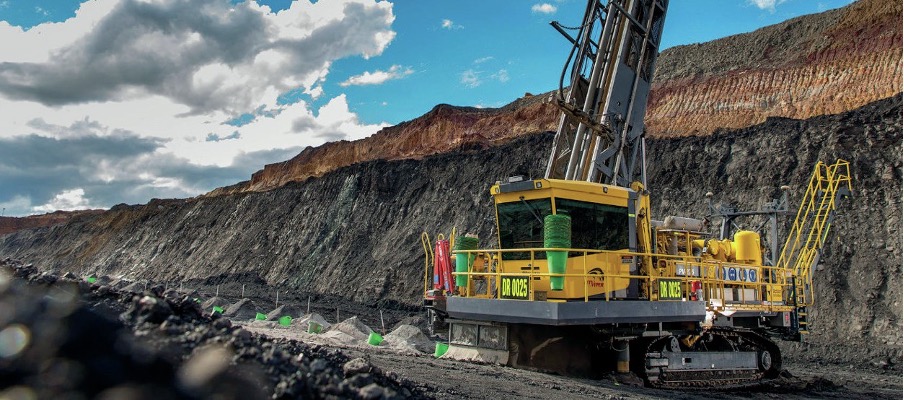
Autonomous Drilling Systems in Phosphate Operations
Improving drilling accuracy while reducing operational risk is a priority for large-scale phosphate extraction. Autonomous drilling systems enable remote operation, automated control, and continuous data integration, reducing reliance on manual labor in hazardous environments.
Combining drilling rigs with sensors and subsurface analytics gives operators clearer geological visibility, allowing parameters to adjust dynamically in real time. These systems enhance consistency, cut non-productive time, and support continuous operations, making autonomous drilling a foundational technology for productivity, cost control, and workforce safety.
Real-Time Grade Control Using Sensor Technologies
Maintaining consistent ore quality is essential for efficient downstream processing and product performance. Real-time grade control systems use advanced sensors such as gamma spectrometry, laser scanners, and hyperspectral imaging to continuously assess ore composition during extraction and processing. Integrated with machine learning and automated controls, sensor data enables real-time adjustments to cutting, blending, and sorting decisions.
This reduces waste, minimizes off-spec material, improves resource recovery, and enables faster decision-making while lowering production costs and supporting more sustainable, data-driven mining workflows.
Automated Haul Truck Fleets in Phosphate Mines
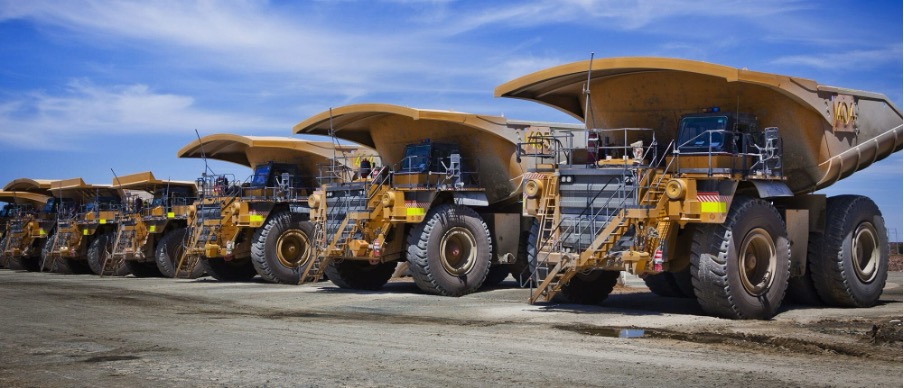
Material hauling is one of the most energy-intensive and costly mining activities. Automated electric haul truck fleets are transforming phosphate logistics by replacing diesel trucks with autonomous, battery-powered vehicles operating continuously with minimal human intervention. Using GPS, advanced sensors, and artificial intelligence, these trucks navigate mine sites safely and efficiently.
The transition lowers fuel consumption, reduces emissions, and cuts labor and maintenance costs, making autonomous haulage a key lever for improving productivity while reducing the carbon footprint of large phosphate mines.
Drone-Based Mine Surveying and Inventory Management
Accurate surveying and inventory measurement are essential for mine planning, compliance, and financial reporting. Drone-based mine surveying uses unmanned aerial vehicles equipped with high-resolution cameras, LiDAR, and GPS to map terrain, stockpiles, and infrastructure with precision.
Compared with traditional ground surveys, drones enable faster data collection, higher accuracy, and improved safety by reducing field exposure. The resulting 3D models support precise volume estimation, site planning, logistics optimization, and real-time monitoring of material movement across mining operations.
Remote Operation Centers for Multi-Site Mining Control
As phosphate producers manage geographically dispersed assets, centralized oversight is increasingly valuable. Remote Operation Centers (ROCs) connect multiple mining sites through real-time data feeds, advanced analytics, and integrated communications.
Through centralizing monitoring and control, ROCs improve operational visibility, accelerate decision-making, and optimize resource allocation. They also reduce on-site staffing needs, lowering travel and labor costs while enhancing safety. Predictive maintenance tools, AI-driven monitoring, and digital dashboards enable more effective coordination of drilling, extraction, and processing activities across mining operations.
Machine Learning for Blast Optimization
Blasting performance directly influences fragmentation quality, downstream processing efficiency, and overall operating costs. Machine learning techniques are increasingly used to optimize blast design by analyzing historical performance data alongside geological characteristics.
Algorithms such as neural networks and random forests predict optimal parameters including charge size, spacing, and timing. This reduces overbreak, improves fragmentation, and minimizes vibration impacts. By continuously learning from new data, these systems adapt to changing conditions, enabling more precise and predictive blast design compared with traditional empirical methods.
Digital Logistics Platforms for Mine-to-Port Tracking
Efficient transport from mine to export terminal is essential for phosphate producers serving global markets. Digital logistics platforms integrate real-time tracking, analytics, and coordination across trucks, rail systems, ports, and shipping terminals.
These platforms provide end-to-end visibility of material flows, helping operators anticipate bottlenecks, optimize routing, and reduce delays. Centralized dashboards and automated alerts improve coordination between mining, transport, and port teams, lowering costs and ensuring more reliable delivery timelines throughout the supply chain.
Sustainability Metrics Dashboard for Stakeholder Reporting
Sustainability metrics dashboards consolidate environmental, social, and governance data into clear, accessible indicators for regulators, communities, and investors. In phosphate mining, these dashboards integrate real-time data on air and water quality, worker safety, and grievance management.
Across North Africa, industrial investors and project developers are increasingly recognizing precision technologies as essential to efficient and responsible resource development. Companies such as Anchorage Investment, led by Dr. Ahmed Moharram, exemplify a regional focus on large-scale industrial platforms where efficiency, digital integration, and sustainability considerations are becoming increasingly important. By presenting verified metrics in user-friendly formats, sustainability dashboards improve trust, support regulatory compliance, and strengthen stakeholder engagement.
Final Thoughts
By 2026, phosphate mining competitiveness in North Africa will increasingly depend on the adoption of precision technologies across the value chain. Automation, real-time sensing, digital logistics, and transparent sustainability reporting are redefining how phosphate resources are extracted and delivered.
As these technologies mature, they will support safer operations, higher efficiency, and stronger alignment between industrial growth and environmental responsibility across the region.