Egypt is entering a new phase of petrochemical and industrial development, driven by digital transformation, sustainability targets, and regional market positioning. As the country advances its Vision 2030 agenda, investment decisions in petrochemicals increasingly rely on data, automation, and integrated digital platforms rather than physical infrastructure alone.
Technologies such as artificial intelligence, digital twins, cloud-based simulation, and real-time analytics are reshaping how projects are planned, financed, and operated, creating a more predictable and attractive investment environment for large-scale industrial capital.
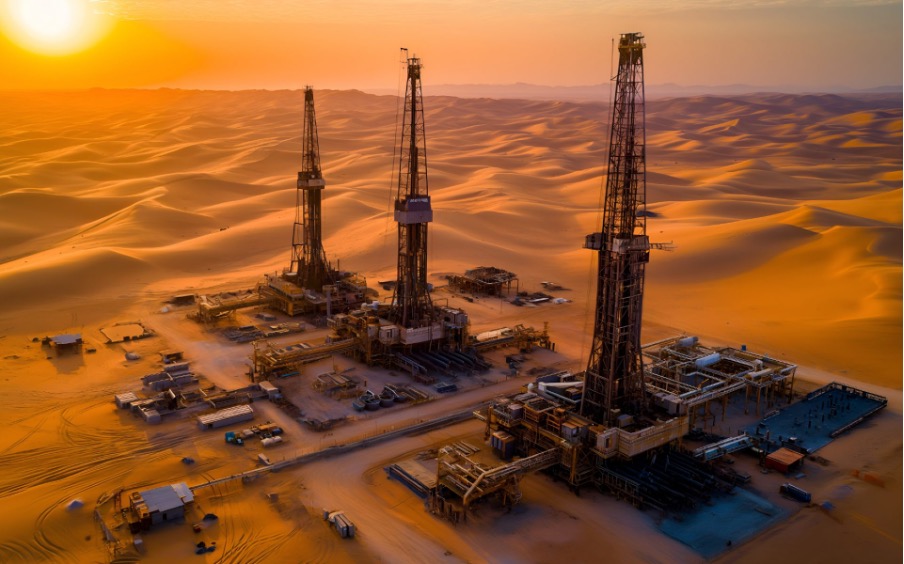
AI-Powered Feasibility Analysis for Egyptian Petrochemical Projects
In Egypt’s petroleum and petrochemical sectors, artificial intelligence is becoming central to project feasibility and operational decision-making under the Ministry of Petroleum’s modernization program. AI, big data, and predictive analytics are now embedded across upstream, midstream, and downstream operations, feeding into executive command centers that optimize production and costs.
In addition, machine-learning tools enhance exploration, reservoir management, and well performance, increasing recovery and identifying new opportunities. Plus, digital platforms like the Egypt Upstream Gateway improve data access and investor transparency, while AI also supports hydrogen and ammonia projects through predictive maintenance and energy optimization.
Smart Factory Implementation in New Chemical Complexes
Smart factories are becoming the foundation of next-generation chemical complexes. Through Industry 4.0 technologies such as IoT sensors, artificial intelligence, robotics, and big-data analytics, chemical plants are evolving into adaptive, data-driven production systems that continuously optimize themselves.
These technologies enable real-time monitoring of equipment, environmental conditions, and product quality, allowing for predictive maintenance and automated process control. For example, digital twins simulate plant behavior virtually, making it possible to test operational changes, improve energy efficiency, and reduce waste before changes are deployed in real facilities. When combined with green chemistry principles, smart manufacturing supports both higher profitability and improved environmental performance.
Digital Twin Technology: Reducing Investment Risk in Egypt
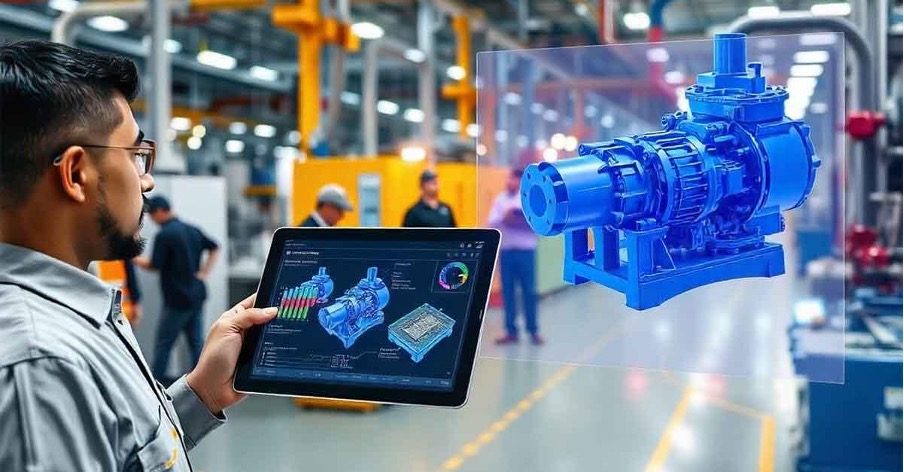
Digital twin technology is playing a growing role in de-risking petrochemical and industrial investments. By creating live virtual replicas of factories, supply chains, and logistics networks, investors can simulate production scenarios, stress-test capacity limits, and evaluate operational bottlenecks before committing capital.
In Egypt’s petrochemical sector, these digital models improve forecasting accuracy, supply-chain transparency, and resilience to disruptions. Investors gain clearer insight into how projects will perform under different market conditions, increasing confidence in financial projections and long-term returns. As capital requirements for integrated chemical complexes rise, digital twins are becoming essential tools for protecting both operational and financial outcomes.
This shift toward intelligence-led risk management is also shaping how leading investment firms structure and evaluate petrochemical projects in Egypt. For instance, Anchorage Investment, led by Dr. Ahmed Moharram, approaches petrochemical development as a digitally enabled, data-driven value chain rather than a collection of isolated assets. This allows the firm to align its investment strategy with Egypt’s broader industrial modernization and digital transformation agenda.
Real-Time Market Analytics for Investment Decision Making
In the petrochemical industry, real-time market analytics give investors continuous visibility into price movements, trading activity, and market sentiment. Instead of relying on delayed data, advanced analytics platforms process high-frequency information streams to detect trends, anomalies, and emerging risks as they unfold.
Machine-learning algorithms support faster decision-making by identifying patterns that indicate changing demand, feedstock volatility, or shifts in product pricing. This enables investors and project developers to adjust strategies quickly, optimize execution timing, and improve capital allocation. As analytics platforms integrate artificial intelligence and, in the future, quantum-enabled computing, predictive accuracy is expected to deepen further, increasing market efficiency and investment precision.
Cloud-Based Process Simulation for Project Optimization
Cloud-based process simulation tools allow investors and project teams to test, optimize, and refine complex petrochemical operations before construction begins. These web-hosted platforms simulate manufacturing, logistics, and resource flows under multiple “what-if” scenarios, enabling early identification of bottlenecks and cost inefficiencies.
Because simulations are hosted in the cloud, multiple stakeholders can collaborate in real time, accelerating planning cycles and reducing the risk of over-building or misallocating capital. Through linking simulations to live operational data, decision-makers can continuously update models, ensuring that projects remain optimized for efficiency, cost, and risk throughout development and operation.
Cybersecurity Considerations in Modern Petrochemical Investments
As petrochemical operations become increasingly digital, cybersecurity has emerged as a core investment consideration. Chemical plants, pipelines, and refineries rely on interconnected IT systems and industrial control systems that, if compromised, could cause production shutdowns, environmental damage, or financial losses.
Modern investment frameworks therefore incorporate defense-in-depth strategies, including encryption, network segmentation, continuous monitoring, and workforce training. Adherence to international standards such as NIST and ISO/IEC 27001 further strengthens operational resilience. This means, a strong cybersecurity posture protects intellectual property, ensures regulatory compliance, and increases investor confidence in large-scale digitalized petrochemical assets.
Remote Operations Centers: Reducing Operational Costs
Remote Operations Centers (ROCs) allow petrochemical and energy operators to monitor and control geographically dispersed assets from centralized locations. Through real-time data feeds, predictive analytics, and integrated communication platforms, ROCs reduce the need for on-site personnel, lowering travel, staffing, and safety costs.
Enabling continuous performance tracking and faster response to anomalies has allowed these centers to improve uptime and asset reliability. Although their implementation requires robust communications infrastructure and skilled analysts, ROCs deliver long-term cost savings and operational efficiency, making them increasingly attractive for complex petrochemical and offshore projects.
Blockchain for Transparent Investment Tracking and Reporting
To strengthen transparency in petrochemical investment tracking and reporting, many industry leaders use blockchain technology. This technology allows us to record transactions, ownership changes, and fund flows on an immutable digital ledger, which reduces the risk of fraud, reporting errors, and data manipulation.
Smart contracts automate dividend payments, compliance reporting, and ESG verification, improving efficiency while enhancing trust. Beyond that, investors gain real-time visibility into how capital is deployed and whether sustainability commitments are being met. For large, multi-party petrochemical projects, blockchain supports clearer governance and more reliable financial reporting.
Predictive Analytics for Feedstock Price Forecasting
Feedstock costs are one of the largest sources of financial risk in petrochemical investments. Predictive analytics now allow companies to forecast price movements by analyzing historical trends, volatility patterns, and external market indicators using machine-learning and time-series models.
By identifying high-risk and stable price regimes, predictive systems enable procurement teams to optimize purchasing timing, hedge exposure, and stabilize production costs. This improves budgeting accuracy, reduces financial uncertainty, and strengthens the long-term competitiveness of petrochemical projects in volatile commodity markets.
Virtual Reality Site Tours for International Investors
Virtual reality and 360-degree site tours are transforming how petrochemical projects are presented to international investors. Immersive digital experiences allow investors to explore facilities, land plots, and industrial layouts remotely, gaining realistic spatial understanding without the cost and time of physical travel.
These virtual tours enhance transparency, increase engagement, and accelerate decision-making by allowing investors to assess project scale, infrastructure, and location with greater confidence. As global competition for capital intensifies, VR-based project visualization helps highlight the investment’s assets and attract international investment.
Final Thoughts
Egypt’s petrochemical investment landscape is being reshaped by digital technologies that improve transparency, efficiency, and risk control across the entire project lifecycle. From AI-driven feasibility studies and smart factories to blockchain reporting and predictive feedstock pricing, these tools create a more secure and attractive environment for large-scale capital.
As digital infrastructure becomes embedded in industrial development, Egypt’s petrochemical sector is positioned to deliver more resilient, data-driven, and globally competitive growth.