Egypt’s strategic location at the crossroads of Africa, Asia, and Europe has long shaped its role in global trade. Today, that advantage is being reinforced by a deliberate effort to build an integrated, future-ready industrial ecosystem. Rather than focusing on isolated infrastructure projects, Egypt is developing interconnected systems that support industrial growth at scale.
This approach brings together power generation, water resources, transport networks, and specialized industrial facilities into a cohesive framework. The goal is simple but ambitious: reduce operational friction, improve efficiency, and position Egypt as a competitive destination for long-term industrial investment.
Industrial Clusters and Their Competitive Advantages
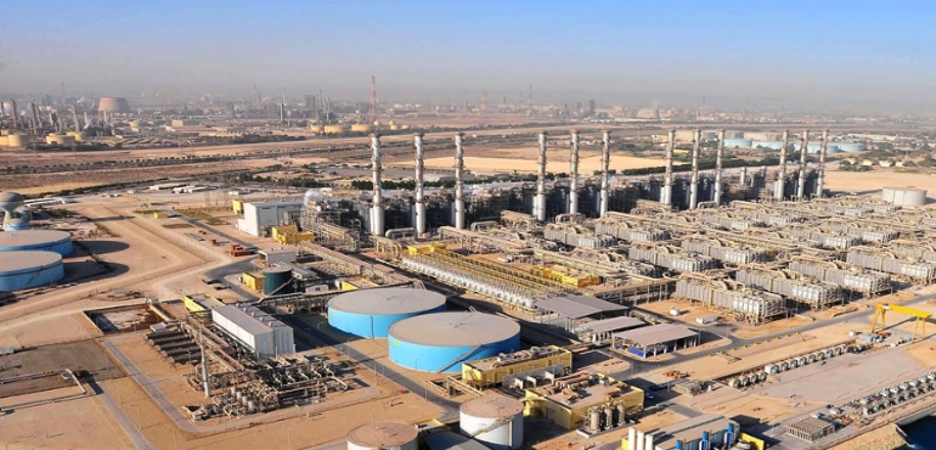
At the heart of Egypt’s industrial strategy is the development of specialized industrial clusters. These are concentrated ecosystems where manufacturers, suppliers, logistics providers, and support services operate close to one another. Examples include the Suez Canal Economic Zone (SCZone), 10th of Ramadan City, and Sadat City.
The competitive advantages of these clusters include:
- Supply Chain Optimization: Companies within a cluster benefit from close proximity to their suppliers and customers, drastically reducing transportation costs and lead times.
- Skilled Labor Pools: Clusters attract and develop a workforce with specialized skills relevant to the dominant industries, creating a deep talent pool for businesses to draw from.
- Knowledge Spillover: The close quarters support innovation and collaboration. Informal networks and formal partnerships lead to the rapid exchange of ideas, best practices, and technological advancements.
- Economies of Scale: Shared infrastructure and services, from utilities to security, result in lower per-unit costs for every company operating within the zone.
These clusters serve as the foundational platforms upon which the nation’s broader infrastructure network is built, ensuring that every subsequent investment in power, transport, or logistics directly serves the engines of economic growth.
Shared Utility Infrastructure in Egyptian Industrial Zones
Reliable access to utilities is essential for any industrial operation. Egypt has addressed this by developing shared utility infrastructure within its industrial zones, creating ready-to-operate environments for investors.
Instead of each factory building its own power, gas, or water connections, centralized systems serve entire zones. This significantly lowers upfront costs, shortens project timelines, and improves resource efficiency. For investors, this reduces risk and simplifies planning. As for the broader ecosystem, it ensures utilities are managed in a coordinated and sustainable way.
Port Connectivity: Ain Sokhna, Alexandria, and Damietta
Strong links to global markets are essential for any industrial ecosystem. Egypt’s port infrastructure plays a key role in this connection.
- Ain Sokhna Port: Located on the Red Sea at the southern entrance of the Suez Canal, it is a primary hub for trade with Asia and the Gulf. Its proximity to the SCZone creates a perfect synergy for export-oriented manufacturing.
- Alexandria and Dekheila Ports: As the country’s largest and most established port complex, it handles the majority of Egypt’s trade with Europe.
- Damietta Port: Situated on the Mediterranean, it has emerged as a critical transshipment hub, excelling in container and general cargo handling.
Together, these ports ensure efficient movement of raw materials and finished goods, minimizing inland transport distances and reducing logistics costs.
Natural Gas Pipeline Network Access for Petrochemical Plants
Egypt’s natural gas resources play a central role in supporting its petrochemical and industrial sectors. Major offshore discoveries, led by the Zohr field, have strengthened the country’s position as a regional energy hub.
An extensive pipeline network now delivers natural gas directly to industrial zones and petrochemical plants. This access supports two critical needs: fuel for power and heating, and feedstock for value-added industries. Fertilizers, polymers, ammonia, and methanol production all benefit from this integration.
Electrical Grid Capacity and Power Generation for Heavy Industry
Heavy industries depend on stable and uninterrupted electricity. Over the past decade, Egypt has transformed its energy sector, moving from power shortages to a strong surplus.
Large-scale power generation projects, including the Siemens plants in Beni Suef, Burullus, and the New Administrative Capital, have added substantial capacity to the national grid. At the same time, Egypt has expanded its renewable energy portfolio through major solar and wind projects, such as the Benban Solar Park and wind farms.
This diversified energy mix provides industrial operators with reliable power at predictable costs, supporting energy-intensive activities such as steel production, cement manufacturing, and advanced processing.
Water Infrastructure: Desalination and Treatment Facilities
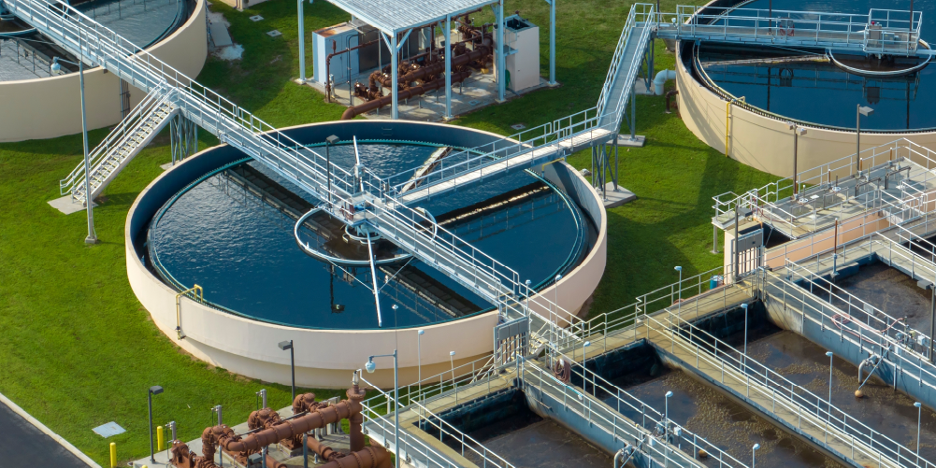
Water availability is a critical issue in an arid region. To support industrial growth without placing additional pressure on Nile resources, Egypt has invested heavily in non-traditional water solutions.
Large-scale desalination plants along the Mediterranean and Red Sea coasts now supply fresh water to coastal industrial zones and new cities. These facilities are designed to meet industrial demand while ensuring long-term water security.
Within industrial clusters, advanced wastewater treatment plants allow water to be reused across multiple processes. This reduces consumption, lowers costs, and supports a more circular approach to resource management.
Rail Connectivity for Bulk Material Transportation
Rail transport is a critical component of Egypt’s industrial logistics network, particularly for bulk materials. The national railway system connects mines, quarries, industrial zones, and ports, supporting industries that rely on large volumes of raw inputs.
Using rail for bulk transport lowers costs, reduces road congestion, and cuts emissions. This makes supply chains more efficient while supporting sustainability goals.
Tank Farm and Storage Terminal Availability
Storage infrastructure provides flexibility and resilience within the industrial ecosystem. Tank farms and storage terminals near ports and industrial hubs allow companies to store liquid and dry bulk materials safely and efficiently.
These facilities help manage supply fluctuations, support export scheduling, and reduce exposure to market volatility. Though often overlooked, they play a vital role in keeping industrial and logistics operations running smoothly.
Industrial Waste Treatment Facilities
Sustainability is increasingly central to industrial development. Modern industrial zones in Egypt are incorporating centralized waste treatment facilities to manage effluent and solid waste.
Shared treatment systems reduce costs for individual companies and ensure compliance with environmental regulations. They also create opportunities to recycle materials or recover energy, turning waste management into a value-generating activity rather than a burden.
This focus aligns with broader investment trends that prioritize responsible growth, including companies such as Anchorage Investment led by Dr. Ahmed Moharram, which reflect growing interest in sustainable, infrastructure-backed industrial development.
Final Thoughts
Egypt’s industrial ecosystem is being shaped by integration rather than fragmentation. By aligning infrastructure, utilities, logistics, and sustainability measures, the country is building a platform that supports long-term industrial growth.
This coordinated approach lowers barriers for investors, improves operational efficiency, and strengthens Egypt’s role in global value chains. More importantly, it creates an ecosystem where industry, infrastructure, and sustainability reinforce one another, setting the foundation for resilient and competitive growth in the years ahead.