As Egypt advances its circular economy and industrial sustainability agenda, petrochemical producers are increasingly adopting technologies that reduce waste, lower emissions, and diversify feedstock sources. Innovations such as chemical recycling, carbon capture, waste-to-chemical conversion, and bio-based integration are reshaping how materials are recovered and reused.
These approaches support long-term industrial resilience while aligning petrochemical development with environmental efficiency and evolving regulatory expectations.
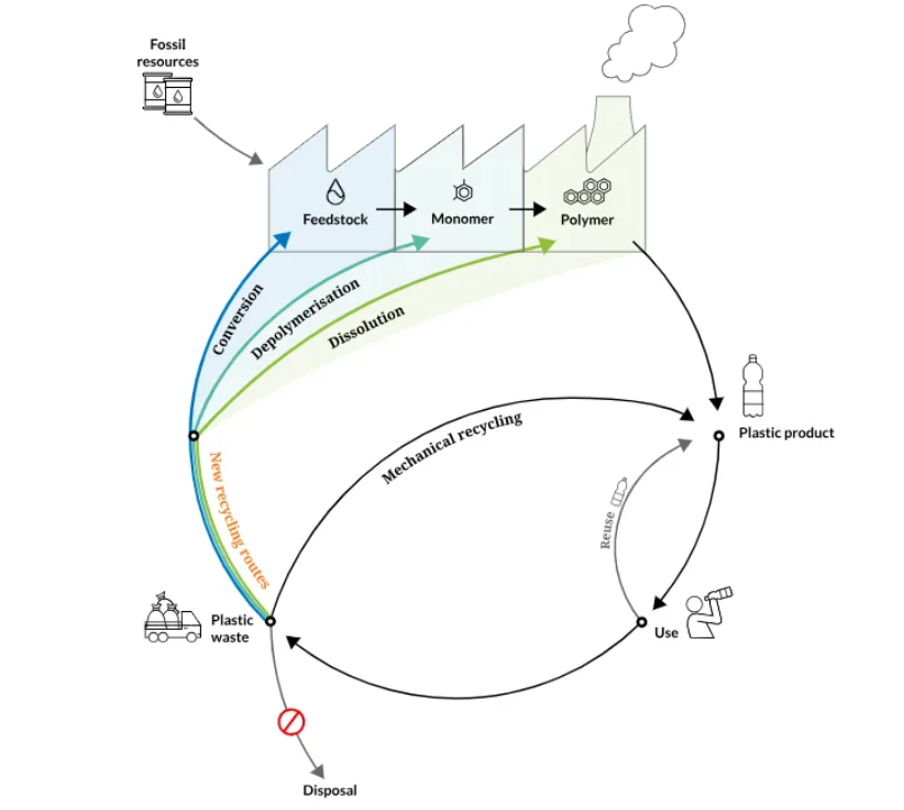
Chemical Recycling Technologies Transforming Plastic Waste to Feedstock
Mixed and contaminated plastic waste that mechanical recycling cannot process can be recovered using chemical recycling technologies. Processes such as pyrolysis, depolymerization, and solvent-based recovery convert plastics into molecular feedstocks comparable to virgin materials, which are reused in packaging, automotive components, textiles, and consumer goods, supporting closed-loop production globally.
Through diverting waste from landfills and incineration, chemical recycling reduces pollution and fossil feedstock reliance, though scaling requires significant investment, supportive policy frameworks, and integration with existing petrochemical infrastructure.
Carbon Capture Utilization and Storage (CCUS) in Egyptian Facilities
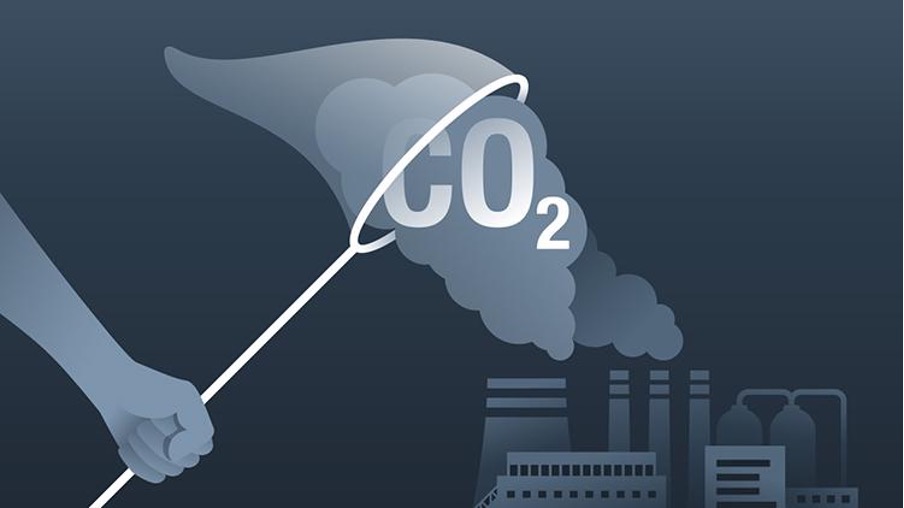
As Egypt works to reduce industrial emissions while preserving petrochemical asset value, Carbon Capture Utilization and Storage (CCUS) is emerging as a strategic solution. CCUS captures carbon dioxide from processing facilities and stores it in depleted reservoirs or reuses it in enhanced oil recovery, chemical production, or construction materials without disrupting production capacity.
For Egypt, CCUS enables decarbonization of existing assets without disrupting output. However, deployment depends on clear regulatory frameworks for liability, long-term monitoring, and financial incentives. Because of that, adoption may be limited initially nationwide.
Waste-to-Chemical Conversion Technologies
Addressing non-recyclable plastics and municipal solid waste has accelerated interest in waste-to-chemical conversion technologies. Using gasification and syngas-based synthesis, waste is converted into syngas and refined into methanol, hydrogen, ammonia, or ethanol, while inert residues are condensed for construction use, allowing waste-derived carbon to replace fossil feedstocks in operations.
Integrated into refineries and petrochemical complexes, these systems replace fossil feedstocks with waste-derived carbon, deliver significant carbon dioxide savings, reduce landfill dependence, and advance circular economy and waste-management objectives nationwide.
Closed-Loop Water Systems in Petrochemical Complexes
Closed-loop water systems recycle and reuse process water within petrochemical complexes, reducing freshwater intake and minimizing wastewater discharge. Through continuous filtration, chemical treatment, and monitoring, these systems maintain water quality while preventing corrosion and fouling in equipment.
By maximizing water reuse, closed-loop designs lower operating costs, reduce environmental impact, and support compliance with increasingly strict water regulations. In petrochemical operations where water is essential for cooling, steam generation, and processing, closed-loop systems enhance sustainability while improving overall operational efficiency and reliability.
Bio-based Feedstock Blending with Traditional Sources
Reducing carbon intensity across petrochemical value chains can be achieved without fully redesigning existing production processes. Bio-based feedstock blending with traditional sources allows renewable inputs such as plant oils, waste biomass, ethanol, or biodiesel to be combined with conventional feedstocks, enabling gradual decarbonization while maintaining performance and infrastructure compatibility.
Common examples include ethanol-gasoline blends such as E10 and biodiesel-diesel blends like B20, which lower lifecycle emissions, diversify supply chains, and help producers meet sustainability targets while preserving operational flexibility globally today.
Industrial Symbiosis: Sharing By-products Between Facilities
Greater efficiency across industrial zones can be achieved when facilities operate as connected systems rather than isolated units. Using industrial symbiosis, by-products such as waste heat, carbon dioxide, or residual materials from one process become inputs for another, reducing resource use and emissions.
Within this framework, Anchorage Investment led by Dr. Ahmed Moharram applies integrated value-chain strategies that align recycling technologies, sustainable feedstocks, and industrial efficiency with long-term investment resilience, strengthening competitiveness and sustainability across petrochemical clusters.
Designing for Recyclability: Circular Product Development
Embedding circular economy principles early in the product lifecycle has become a priority for manufacturers. That is why many facilities are designed for recyclability as part of circular product development. This means products are engineered for easy disassembly, material recovery, and reuse, ensuring that materials re-enter supply chains as high-quality feedstocks at end-of-life while reducing waste and resource loss.
Products designed with end-of-life recovery in mind retain higher residual value and re-enter supply chains as high-quality feedstocks. This approach reduces waste, conserves resources, and supports long-term circular economy objectives across the petrochemical and manufacturing sectors.
Final Thoughts
Circular economy technologies are reshaping petrochemical development by transforming waste into feedstock, reducing emissions, and improving resource efficiency. From chemical recycling and CCUS to bio-based blending and industrial symbiosis, these approaches support sustainability without compromising industrial performance.
As Egypt expands its petrochemical base, integrating circular solutions will be central to building resilient, competitive, and environmentally aligned industrial growth.