As Egypt’s petrochemical sector advances its modernization and efficiency agenda, digital control technologies are becoming central to operational competitiveness. Advanced Process Control (APC) systems integrate data analytics, automation, and predictive modeling to stabilize production, optimize energy use, and improve product quality.
From machine learning and real-time optimization to self-learning control and advanced analytics, APC is reshaping how petrochemical facilities operate, enabling more resilient, efficient, and data-driven industrial performance.
Machine Learning Models Optimizing Chemical Yields
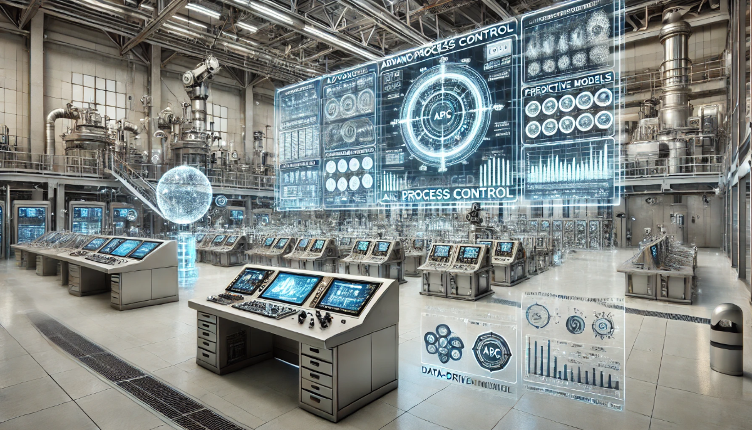
Improving chemical yields while reducing waste remains a core objective for petrochemical producers. Machine learning models are increasingly used to analyze complex relationships between reaction conditions and output yields. Trained on large datasets from historical operations, experiments, and simulations, these models predict optimal combinations of reagents, catalysts, temperatures, and pressures.
By replacing traditional trial-and-error approaches, machine learning reduces experimentation costs and accelerates optimization cycles. These models enable rapid exploration of large chemical design spaces, improving resource efficiency and supporting more sustainable production across petrochemicals, materials, and specialty chemicals.
Model Predictive Control (MPC) Implementation Benefits
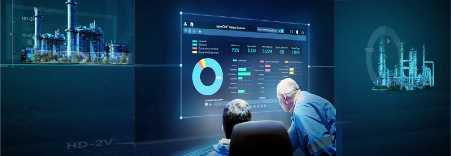
Maintaining stable operations in multivariable, constraint-driven processes is a persistent challenge in petrochemical plants. Model Predictive Control addresses this by using dynamic process models to forecast future behavior and optimize control actions in real time.
Through anticipating disturbances before they propagate through the system, MPC improves product consistency, reduces variability, and increases throughput. It also optimizes energy and raw-material usage by minimizing unnecessary corrections. This means that operating within defined safety and equipment constraints enables MPC to enhance operational stability while delivering measurable efficiency and cost benefits over conventional control strategies.
Real-Time Optimization (RTO) for Maximum Profitability
Operational efficiency alone does not guarantee profitability in volatile markets. Real-Time Optimization systems integrate live process data with economic models to continuously adjust operating targets in pursuit of maximum profit.
Balancing feedstock costs, energy consumption, and product margins allows RTO to identify the most economically optimal operating conditions at any moment. Typically implemented on top of MPC systems, RTO provides actionable recommendations that adapt quickly to changes in market conditions or feedstock quality. This capability enables petrochemical facilities to unlock incremental financial gains while improving asset utilization and operational agility.
Neural Networks for Complex Process Control
Traditional control models often struggle with highly nonlinear, multivariable industrial processes. Neural networks address this limitation by learning complex input-output relationships directly from historical process data.
Once trained, neural network models can predict system behavior under changing conditions and support adaptive control strategies. In petrochemical applications, they improve stability, reduce variability, and enhance fault detection by capturing dynamics that are difficult to express mathematically. Integrated into real-time control systems, neural networks reduce the need for manual tuning and support more responsive, intelligent process control.
Integration with Distributed Control Systems (DCS)
Effective APC deployment depends on seamless integration with existing automation infrastructure. Distributed Control Systems provide the backbone for collecting, centralizing, and managing real-time process data across petrochemical plants.
By connecting sensors, control loops, and field devices to unified data streams, DCS integration ensures consistent operational visibility and coordinated control actions. This data foundation supports advanced analytics, predictive maintenance, and optimization platforms while reducing data silos. Strong DCS integration aligns engineering, operations, and management decisions, enabling APC systems to deliver sustained performance improvements.
Inferential Sensors Reducing Laboratory Analysis Delays
Laboratory analysis delays can limit responsiveness in fast-moving petrochemical processes. To address this challenge, inferential or soft sensors use real-time process variables, such as temperature, pressure, and flow, to estimate quality parameters continuously.
Inferential models combine infrequent lab results with live sensor data to provide immediate quality estimates, enabling faster adjustments and reducing off-spec production. These virtual sensors also act as reliable backups during analyzer downtime, transforming delayed, discrete lab measurements into continuous, actionable insights that improve product consistency and operational efficiency.
Advanced Analytics for Quality Prediction
Preventing quality deviations before they occur is increasingly achievable through predictive analytics. Advanced quality prediction models analyze historical process data, sensor readings, and production metrics to identify patterns associated with defects or performance losses.
Operators gain the advantage of proactive intervention when quality outcomes are forecast in advance. This capability shortens feedback loops, cuts rework and waste, and drives higher overall plant efficiency. Integrated with automation and monitoring systems, predictive quality analytics also enables faster decision-making and supports continuous improvement across petrochemical operations.
Energy Optimization Through Intelligent Control
Energy consumption represents a significant cost and emissions factor in petrochemical facilities. Intelligent control systems integrate automation platforms, sensors, and analytics to dynamically manage energy use across production units and utilities.
Intelligent energy controls continuously monitor demand, operating conditions, and system efficiency, adjusting operations in real time to minimize waste. Applications include optimizing heat integration, power distribution, and utility systems. Although implementation may require upfront investment, these systems deliver long-term savings, reduce emissions, and improve operational performance through data-driven energy management.
Self-Learning Control Systems Adapting to Process Changes
Industrial processes rarely operate under static conditions. Self-learning control systems use adaptive algorithms that continuously update control models based on real-time data, allowing systems to respond autonomously to changing inputs and disturbances.
These systems learn from ongoing operations, improving stability and resilience without the need for manual retuning. This adaptability is particularly valuable in environments with variable feedstocks or product grades, enabling consistent performance, reduced downtime, and lower operator workload while maintaining safety and quality standards.
ROI Analysis: APC Investment Returns in Chemical Plants
Evaluating the financial impact of APC investments is critical for decision-makers. Return-on-investment analysis consistently shows that APC systems improve profitability by reducing variability, increasing throughput, and lowering energy and feedstock consumption.
Savings from fewer off-spec batches, reduced downtime, and optimized utilities often result in short payback periods. Beyond direct cost reductions, APC delivers predictable performance and improved asset reliability. Industrial investors and companies in Egypt, such as Anchorage Investments led by Dr. Ahmed Moharram, exemplify the region’s focus on using Advanced Process Control to enhance operational resilience, efficiency, and long-term value creation.
Final Thoughts
Advanced Process Control is becoming a cornerstone of Egypt’s petrochemical modernization efforts. Integrating machine learning, predictive control, real-time optimization, and adaptive analytics allows APC to enable safer, more efficient, and more profitable operations.
As market volatility and sustainability pressures increase, data-driven control systems will play a critical role in strengthening competitiveness, improving energy performance, and supporting resilient, future-ready petrochemical production across the sector.